
Description
What Is a Tall Walking Boot?
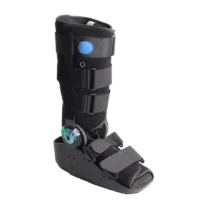
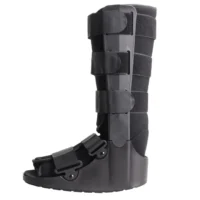
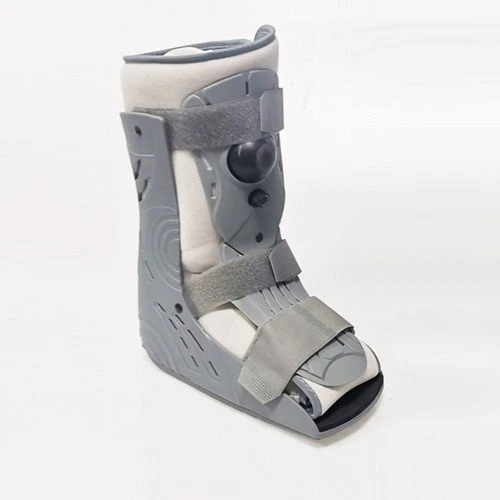
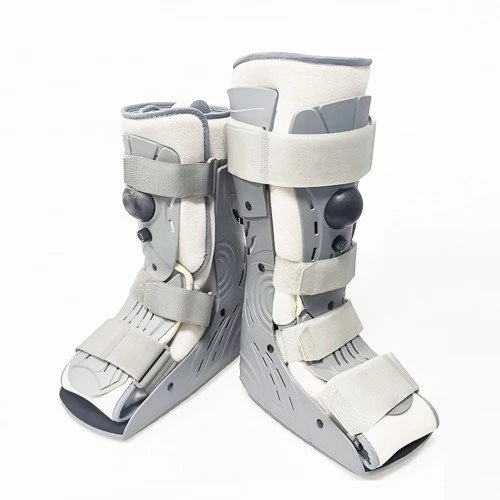
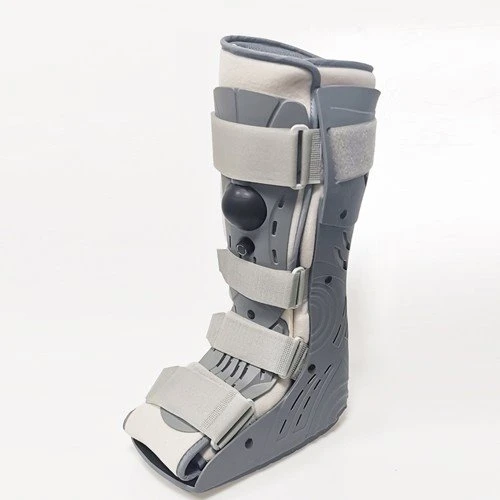
A tall walking boot is a rigid walker that reaches above the ankle and supports the lower leg as well as the foot. The taller shell adds control over rotation, which is why it is chosen when a clinician wants more than ankle-and-foot protection. Model WK-004 is a 17-inch power walking boot with a bottom air cushion, a foam liner and a rubber non-slip outsole, in sizes S to XL. It is not the short 11-inch version, and it is not a hinged or angle-adjustable boot.
Why Choose This Orthopedic Walking Boot?
Stays put. So you can forget it’s there. That sentence is the design brief behind this tall walking boot, and it matters most in a long shell, because a boot that twists takes the leg with it. An analysis of 1,058 knee-brace reviews and community threads found the most common complaint was a support that slides down while you walk (109 mentions), followed by heat and itching (77), over-tightening and pressure on the calf (65) and unreliable sizing (64).
Four design decisions answer those complaints directly.
- 17-Inch Tall Shell: Support runs from the foot up past the ankle, giving the extra rotational control that a tall walking boot is chosen for during a longer protection period.
- Bottom Air Cushion: An inflatable airbag under the foot absorbs load through the step and can be adjusted as swelling changes, so the boot stays comfortable as the leg settles.
- Soft Foam Liner: A foam inner layer cushions the leg against the shell, which is what makes weeks in a tall boot tolerable rather than something to endure.
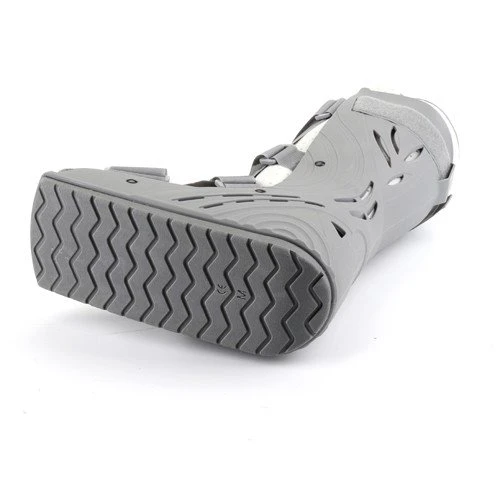
- Rubber Non-Slip Outsole on a Rocker Bottom: Grip where the floor is uncertain and a curved sole that supports a more natural gait pattern instead of a flat, rigid step.
Premium Engineering & Design Details
Every value below applies to model WK-004, the 17-inch tall walking boot in this listing.
Strategic Advantage Over Standard Orthopedic Footwear
Compared with a standard tall walking boot, four structural differences matter most.
- Rotational Control, Not Just Protection: Because the shell passes above the ankle, a tall walking boot limits the twisting movement that a shorter boot leaves unmanaged.
- Shock Absorption Under the Foot: The bottom airbag takes load where it arrives — under the sole — which is more effective than padding the sides of the leg.
- Comfort Aimed at Weeks, Not Days: A foam liner and an adjustable cushion are what allow a tall walking boot to stay on through a long protection period.
- Grip for Real Surfaces: A rubber outsole with a rocker profile handles wet floors and uneven ground better than a hard plastic base, and it wears longer.
Two honest limitations. First, this model has no hinge and no angle settings: if your protocol calls for controlled ankle movement in fixed increments, choose a ROM boot instead. Second, the boot protects the foot and ankle but does not set your weight-bearing limits or your exercise programme; those come from your treating clinician.
OEM and ODM programmes are available for distributors and private-label brands, including logo, packaging and specification development.
Best For: Ankle & Foot Fracture Recovery
This tall walking boot is intended for the situations below.
- Stable foot and ankle fractures where the foot must be protected while it heals
- Severe ankle sprains that need immobilisation rather than taping
- Post-operative fixation after Achilles tendon rupture repair
- Recovery after ligament, soft-tissue and tendon surgery
- Longer protection periods, where more of the lower leg needs to be held still
- Replacing a cast so the limb can be inspected, cleaned and exercised as healing allows
The American Academy of Orthopaedic Surgeons (AAOS) patient information on stress fractures of the foot and ankle explains that most stress fractures are caused by overuse and repetitive activity and are common in runners, that temporarily avoiding high-impact activity is key because returning too quickly can delay healing or risk a complete fracture, that treatment often includes protective footwear such as a removable short-leg fracture brace shoe, and that healing typically takes six to eight weeks.
Browse the full range of walker boots, or see our medical moon boot if you want the same tall coverage with dual foot bladders.
Sizing & Fitting Guide (17″ Tall Height)
This tall walking boot is a 17-inch shell in four sizes, and it fits either foot.
Fitting in three steps: seat the heel at the back of the shell so the toes clear the front edge; close the straps from the ankle upward and check that the calf is held without pressure; then inflate the base cushion until the foot feels evenly supported.
Re-check the height and the straps after the first ten minutes of walking. A tall walking boot that sits too high on the calf will push down on the ankle, and one that is too short will let the foot slide forward inside the shell.
Frequently Asked Questions (FAQ)
What is a tall walking boot used for? It protects the foot and ankle while adding control over rotational movement, because the shell passes above the joint. A tall walking boot is used for stable fractures, severe sprains and the period after foot or ankle surgery.
When should I choose tall instead of short? Choose by what your clinician wants immobilised. If the ankle and foot are enough, the short version is lighter and cooler; if more of the lower leg needs to be held still, choose the tall walking boot.
Does the air cushion replace straps? No, it works with them. The airbag under the foot absorbs load and helps control swelling, while the straps hold the leg in the shell. Adjust both, and release air if the foot feels squeezed.
Can I walk outside in it? Yes. The rubber outsole is fitted for grip on wet or uneven ground and to resist wear. Take extra care on stairs and slopes, and follow any weight-bearing limits you have been given.
How much weight can I put on it? That is a clinical decision made for your injury. The boot supports the limb but does not change how much load the bone or repair can take, so follow your surgeon’s or physiotherapist’s instructions exactly.
How long will I need it? That depends on the injury. The AAOS notes that healing of a stress fracture typically takes six to eight weeks, and that most ankle fractures take at least six weeks of early healing. Your own schedule will be set around follow-up imaging.
Medical Disclaimer
This product is intended for general orthopedic stabilization and support purposes only. It does not constitute personalized medical advice. Always consult your primary healthcare provider, orthopedic specialist, or physical therapist to ensure this device is appropriate for your specific injury, rehabilitation schedule, and weight-bearing status before use.