
Description
What Is an Air Walker Boot?
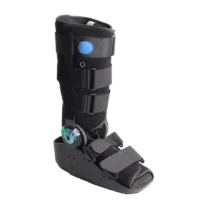
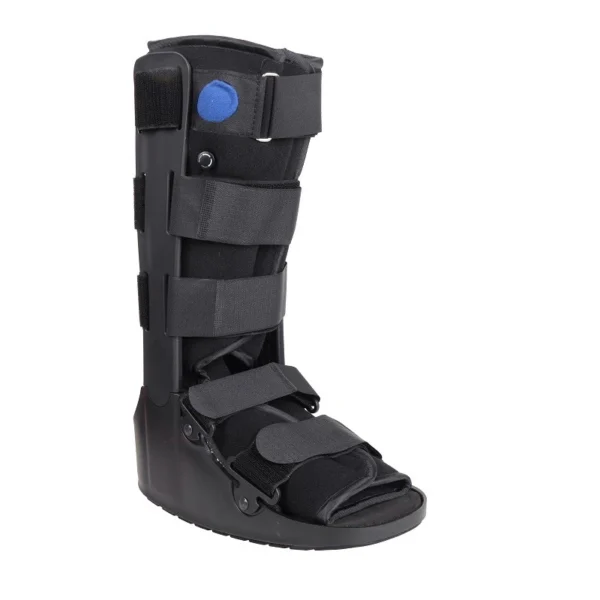
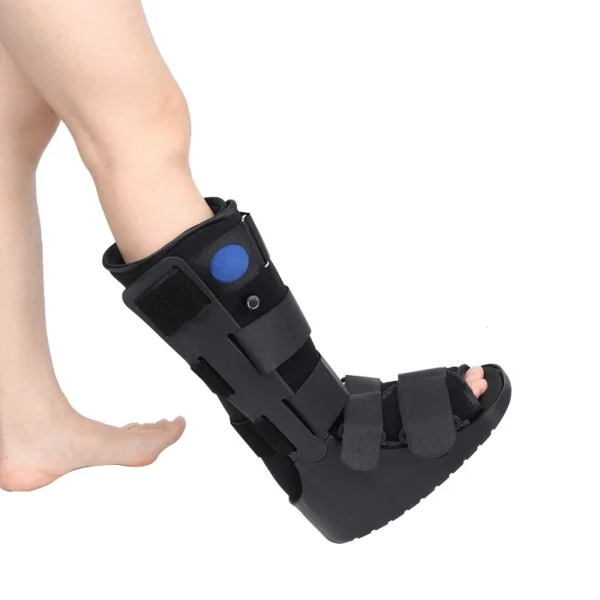
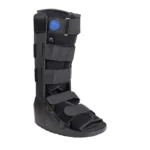
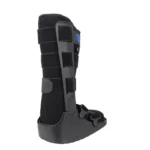
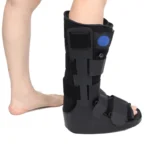
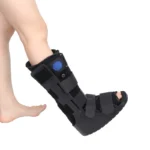
An air walker boot is a rigid walking brace that holds the foot and ankle still while a fracture, a sprain or a surgical repair heals. Inside the shell, inflatable aircells press evenly around the ankle to control swelling, and a rocker sole under the foot lets the boot roll through each step instead of stopping the movement dead.
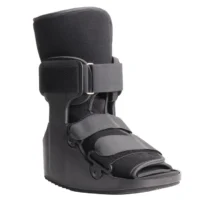
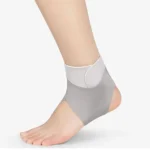
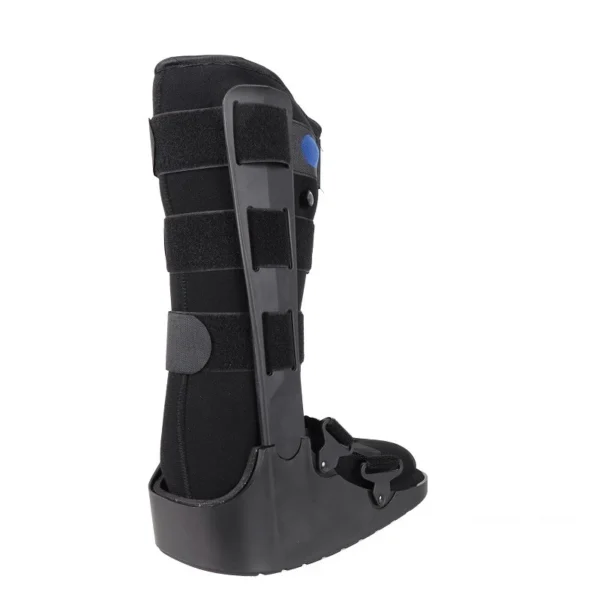
Model WK-009 is the 17-inch tall version: steel-reinforced plastic uprights, moulded side walls and a built-in shock-absorbing insole, in a symmetrical shape that fits the left or right foot. It is not a plaster cast, not a compression ankle sleeve, and not the shorter shell in this range.
Why Choose This 17″ Tall Air Walker Boot?
Stays put. So you can forget it’s there. A tall air walker boot is worn all day, every day, for the whole length of a recovery protocol, and guidance for ankle fractures puts early healing at six weeks or more and complete healing at ten to twelve weeks. The brace therefore has to still be workable in week eight, not only in week one. The questions buyers ask about this category are consistent: does it hold air, which size do I need, and how heavy is it. All three are answered below with measured numbers instead of adjectives.
- Rocker sole as standard: The sole rolls through the step rather than blocking it, which is what makes such a tall air walker boot usable for daily activity instead of only for sitting still, and it is the detail that separates an inflatable walking boot from a rigid cast.
- Steel-reinforced uprights: Plastic-moulded uprights with steel reinforcement hold the ankle and the lower leg through a long wearing period instead of flexing loose after a few weeks.
- Built-in shock-absorbing insole: The insole under the foot softens heel strike, which matters more in a taller shell where the whole lower leg is braced.
- Measured fit instead of a shoe-size guess: Every size carries its own US and UK measurements alongside the measured internal dimensions of the air walker boot, so the choice can be checked against a foot length rather than guessed.
Premium Engineering & Design Details
Every value below applies to model WK-009, the 17-inch air walker boot in this listing.
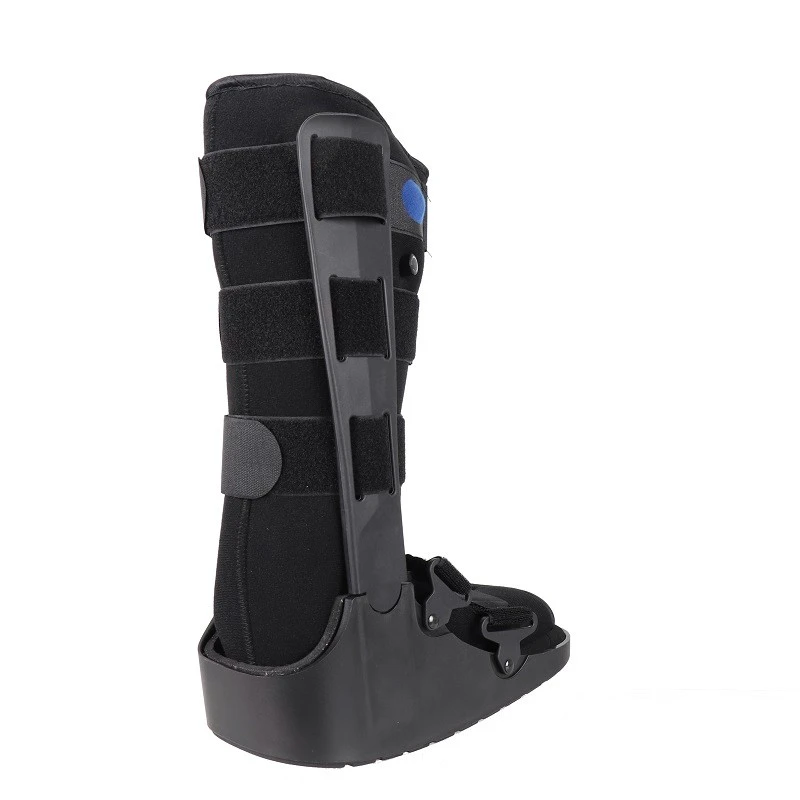
Rocker Sole & Inflatable Aircell System
A tall cam walker boot is really defined by two separate things: how the sole meets the ground and what happens inside the shell. They do different jobs, and it is worth being clear about which is which.
The rocker sole and the aircells work together, but each answers a different problem. The rocker profile changes how the boot meets the ground: instead of a flat sole that stops your foot from rolling, the curved profile lets an air walker boot roll from heel to toe, which is why patients can keep up daily activity while the ankle is held rigid.
The air chambers handle the ankle itself. Open the valve and let the air out before you put the boot on; close it once your foot is in place, then add air by hand until the shell feels firmly snug around the ankle and the lower calf. Snug, not tight: if the skin above the shell starts to pale or throb, release some air.
Before each use, check the valve seating and the tube — the two points where an air walker boot most often begins to lose pressure. If it loses pressure within a few hours of being inflated, stop walking in it and contact us rather than topping it up again.
Best For: Ankle Sprains, Stable Fractures & Post-Op Recovery
This air walker boot is intended for the clinical situations below. Final suitability is a clinical decision, and the brace is supplied for use under medical guidance.
- Acute ankle sprains, including higher-grade injuries
- Soft tissue injuries of the ankle involving ligaments, tendons or muscles
- Stable fractures of the lower leg, foot and ankle
- Post-operative recovery after orthopedic surgery or ligament repair
- Sprain and injury recovery where the ankle needs to be held still while swelling settles
- Fracture care, where partial weight bearing has been permitted and the boot is used as a removable cast alternative
- A foot or ankle that has to be kept protected while the patient stays mobile rather than on bed rest
The same product comes up in different conversations depending on the injury. Someone looking for a walking boot for a sprained ankle is usually dealing with a ligament injury and swelling, while a walking boot for a broken ankle is a fracture case where weight bearing may or may not have been cleared. An air walker boot covers both situations, but the wear schedule and the permitted load are not the same.
For stable ankle fractures, the American Academy of Orthopaedic Surgeons notes that a short leg cast or a walking boot is a standard treatment, and that many isolated lateral malleolus fractures are stable enough to allow you to put weight on the ankle. Ankle fractures are the fourth most common fracture in adults. See the AAOS patient information on ankle fractures for how these injuries are classified and treated.
One limit belongs in plain language here: an air walker boot protects the joint, but it cannot decide how much weight you may put through it — that instruction has to come from your clinician. This is also the reason a sprain or a break needs the boot described by a professional rather than chosen from a photograph.
Sizing & Fitting Guide (XS–XL, 17″ Tall)
There is no separate left or right to order. Choose the size from a measured foot length, then confirm it with your clinician — the table gives the US and UK shoe ranges from the manufacturer’s size chart alongside the measured internal length, width and height of each shell.
Measure from the heel to the tip of the longest toe, in centimetres or inches, and compare that with the internal length rather than with your everyday shoe size. Then put the foot in the open boot, close the valve, and add air until the shell is snug, not tight.
Two practical notes. The unit weight rises from 1,020 g to 1,380 g across the range, so a larger foot carries a slightly heavier shell — worth knowing before someone promises you a light boot. And if it starts to feel loose during the day, check the air pressure and the fit again rather than simply inflating harder: an air walker boot that has been over-inflated will not sit any more securely, it will only press harder.
Who It’s For — and Who It Isn’t
This air walker boot is built for the middle of a recovery: past the point where a repair has to be held absolutely rigid, but before the ankle can tolerate unprotected load.
- A good match when the injury is stable, weight bearing has been permitted, and the ankle needs to stay protected while the patient keeps moving.
- A good match when swelling needs to be managed during immobilisation, and the compression has to be adjustable through the day.
- A good match when the clinician wants the joint accessible for checks and washing rather than sealed in a cast, and a taller shell is preferred for support further up the lower leg.
- Not the right choice when the fracture is unstable or weight bearing has not been cleared — an air walker boot does not replace surgery or a rigid cast in those cases.
- Not the right choice when the protocol calls for controlled movement in set increments rather than immobilisation.
- Not the right choice when a shorter shell is sufficient — if the injury sits low enough, a short-shell boot is the better fit. Browse the full walker boots range to compare heights.
Frequently Asked Questions (FAQ)
Is an air walker boot the same as a walking boot? The two names are used for the same family of brace, also sold as an air cast boot: a rigid shell with a footbed, worn to protect the foot and ankle while an injury heals. “Air” signals the inflatable chambers inside the shell, which add adjustable compression on top of the rigid support.
What does the rocker sole actually change? A flat sole blocks your foot from rolling, so you walk on the edge of the boot. A rocker profile lets an air walker boot roll from heel to toe, which keeps the stride closer to normal and makes daily walking less of a compromise.
How do I inflate it, and how firm should it feel? Release the air before putting the boot on, close the valve with your foot in place, then add air by hand until the shell is firmly snug around the ankle and lower calf. If the skin above the shell pales or throbs, release some air. Support you can wear for hours is the target, not the tightest setting you can reach.
Can I walk on it? Walking in it is the point of the design, and the rocker sole exists to make walking in an air walker boot easier. How much weight you may take is a clinical instruction rather than a product feature, so follow the guidance you were given.
Does it fit either foot? Yes. The design is symmetrical, so this air walker boot fits the left or the right foot without a separate version, and it can move between feet if your clinician changes the side.
How long will I wear it each day? Expect weeks rather than days. Early healing of an ankle fracture is usually measured in six weeks or more, with complete healing taking ten to twelve weeks, and the wear schedule is set by your clinician. Keep the liner clean and dry, check the air pressure and the fit as swelling changes, and treat this air walker boot as equipment for the whole protocol rather than for a weekend.
⚠️ Medical Disclaimer
This product is intended for general orthopedic stabilization and support purposes only. It does not constitute personalized medical advice. Always consult your primary healthcare provider, orthopedic specialist, or physical therapist to ensure this device is appropriate for your specific injury, rehabilitation schedule, and weight-bearing status before use.