

Description
What Is a Knee Brace for ACL Injuries?
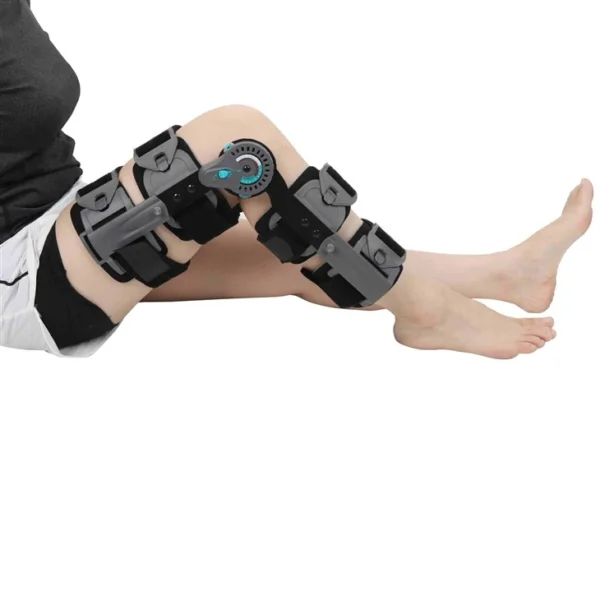
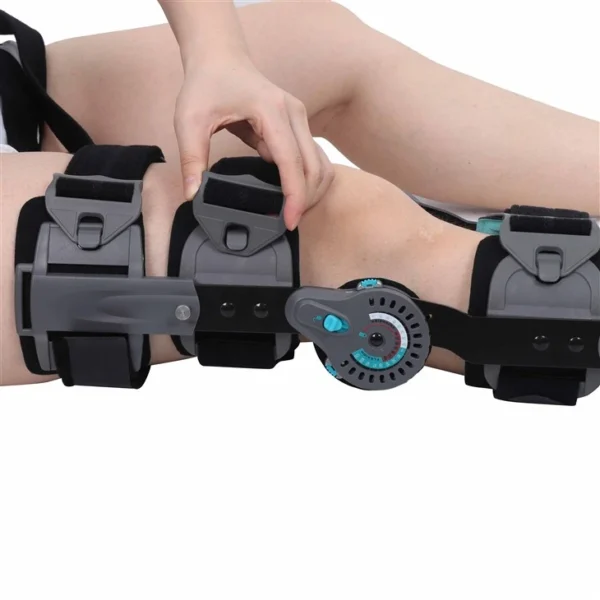
An adjustable knee brace for ACL injuries is a hinged range-of-motion (ROM) orthosis. It holds the knee in a controlled position while the ligament heals, and it lets your surgeon decide how far the joint may extend, flex or lock at each stage of recovery. Dial-lock hinges set those limits in precise steps, so protection follows the rehabilitation protocol instead of guesswork. Model KN-001 is a true post-operative ROM brace. It is not a compression knee sleeve, and it is not an osteoarthritis unloader brace.
Stays Put. So You Can Forget It’s There.
That single sentence is the design brief for this brace. An analysis of 1,058 knee-brace reviews and community threads found the most common complaint was a support that slides down while you walk (109 mentions), followed by heat and itching (77), over-tightening and pressure on the calf (65), and unreliable sizing (64).
The most upvoted praise pointed the other way: “comfortable enough that I actually forget I’m wearing it.” A knee brace for ACL injuries only works while you keep wearing it, so this frame is built to hold position through a full day of standing, sitting and walking.
Why Choose This Adjustable Hinged Knee Brace?
Four design decisions separate this brace from a standard post-operative support, and each one answers a complaint documented above.
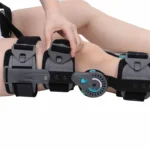
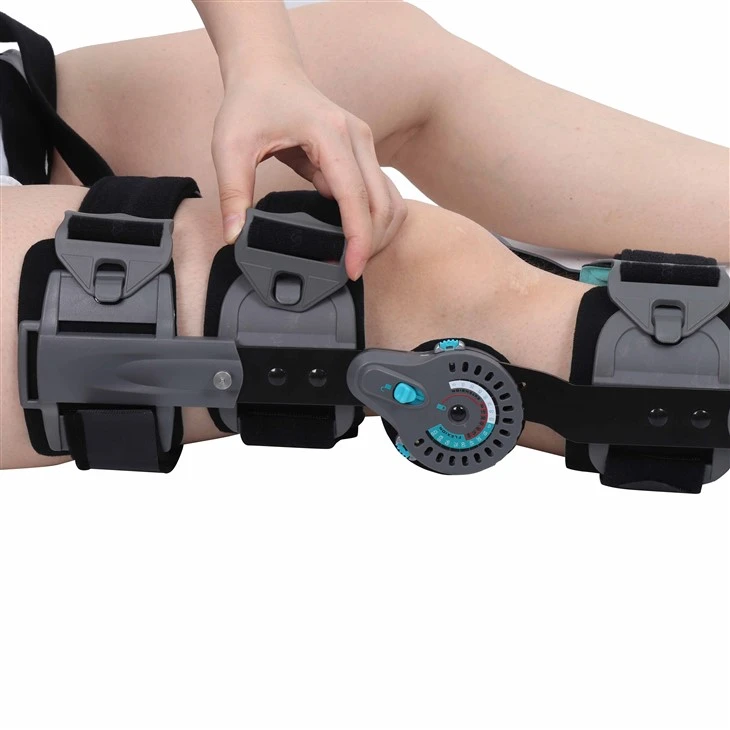
- Dial-Lock ROM Hinges: Press and rotate each hinge to set extension, flexion and immobilization limits. Lock positions run from 0° to 90°, and adjustment moves in 15° steps — precise enough to follow a staged rehabilitation plan without tools.
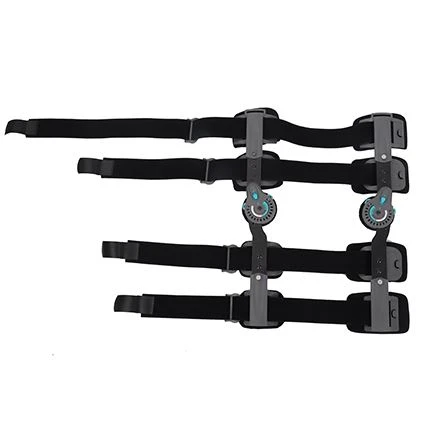
- Telescopic Length Adjustment: A pull-pin release lets the frame slide to the length your leg actually needs, from thigh cuff to calf cuff, so the hinge centres on the joint instead of sitting high or low.
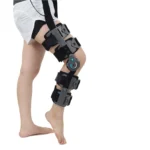
- Long Side Bars for Collateral Control: Rigid aluminium side bars run along both sides of the knee joint to resist valgus and varus deviation, which is what protects the collateral ligaments while a cruciate ligament is healing.
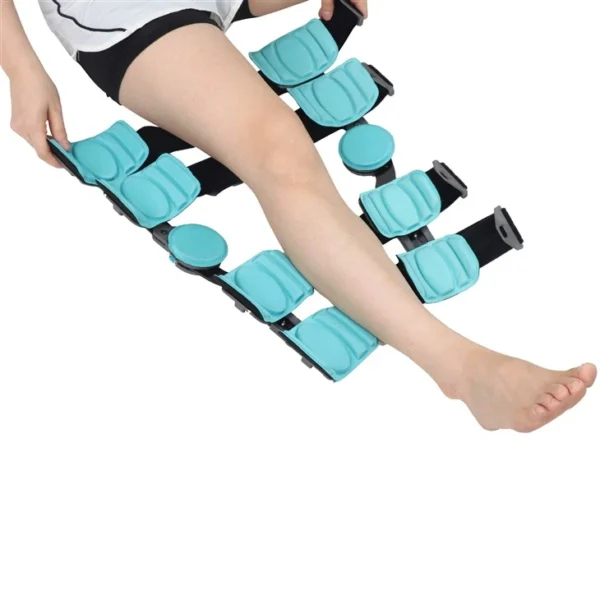
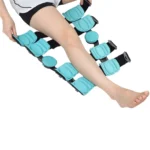
- Padded, Anti-Slip Fit: Mouldable aluminium cuffs sit inside multi-layer fabric padding, and an anti-slip contact pad limits the migration that makes most knee braces for ACL injuries uncomfortable by the third hour of wear.
Premium Engineering & Design Details
The specifications below are what make this knee brace for ACL injuries usable hour after hour, across a full rehabilitation programme.
Every value above applies to model KN-001, the adjustable knee brace for ACL injuries in this listing.
Strategic Advantage Over Standard Knee Braces
Compared with a standard knee brace for ACL injuries, four structural differences matter most.
- Controlled Motion Instead of Full Immobilization: A cast or a rigid immobilizer holds the knee still. This brace moves with you while it limits how far the joint may go, which is what allows a rehabilitation protocol to progress week by week.
- Structure Where a Sleeve Has None: A knee sleeve compresses soft tissue but cannot limit extension, flexion or rotation. This knee brace for ACL injuries adds a hinged frame and long side bars, so it can support the joint while a ligament heals.
- Adjustable Length and Width: A fixed-length brace either sits too high on the thigh or crowds the calf. The telescopic frame and adjustable cuffs place the hinge on the joint line and the cuffs above and below it.
- Built for Repeat Wear: The frame uses PP, aluminium and POM components with a padded lining, so it tolerates months of daily use rather than a few weeks.
One honest limitation: this is a clinical brace, not a fashion item. It is bulkier than a sleeve and it will show under slim trousers. Buyers who need something invisible under clothing should choose a sleeve; buyers who need controlled range of motion and collateral support during recovery should choose this knee brace for ACL injuries.
For distributors and private-label brands, OEM and ODM programmes are available, including logo, packaging and specification development. This model is produced by a Class I orthopedic device manufacturer in Xiamen, China, operating an ISO 13485 quality system and stating CE and FDA registration readiness for global markets. Production capacity is 100,000 pieces per month.
Indications: ACL, PCL, MCL & LCL Injuries
This knee brace for ACL injuries is intended for the clinical situations below, in hospital, clinic and home rehabilitation settings.
- Post-operative knee immobilization and protected motion after ligament reconstruction (ACL, PCL, MCL, LCL)
- Pre-operative stabilization where pain or instability limits safe movement
- Patella dislocation and post-dislocation stabilization
- Conservative treatment of ligament injury, including partial tears managed without surgery — this knee brace for ACL injuries can be locked for protection or opened to a prescribed angle for controlled movement
- Combined ligament instability. An ACL rupture is commonly accompanied by a meniscal tear, which is why knee braces for meniscus injuries and the meniscus damage braces used in the same protocols all rely on the same principle of controlled range of motion
- Post-injury and post-operative knee joint fracture and sprain fixation
- Sports-injury rehabilitation and home recovery programmes under professional guidance
For a clinical overview of how ACL injuries are classified, diagnosed and treated, see the American Academy of Orthopaedic Surgeons (AAOS) patient information on anterior cruciate ligament injuries. The same source notes that ACL tears account for more than half of all knee injuries in the United States.
Sizing & Fitting Guide
This knee brace for ACL injuries ships in a universal, adjustable size that fits either leg, so there is no left or right ordering decision and no separate size chart to guess from.
Fitting in three steps: open the brace and set the frame width to your leg thickness; wrap the cuffs so each hinge sits level with the centre of your knee joint; then close the lining and the straps in order, working from the top strap down.
If a hinge does not line up with the joint line, loosen the rear strap and reposition the frame before tightening anything else. A knee brace for ACL injuries that sits off-centre will migrate during walking.
This model belongs to our knee braces range of orthopedic supports, which we supply to clinics, distributors and private-label programmes.
Frequently Asked Questions (FAQ)
What is a knee brace for ACL injuries used for? It stabilizes the knee after an ACL tear or reconstruction and controls how far the joint may extend, flex or lock. Surgeons and physiotherapists use the adjustable limits to protect the graft and the repaired tissue during each stage of rehabilitation.
Is this a knee immobilizer or a knee brace for ACL injuries? It is a knee brace for ACL injuries with adjustable range of motion. A knee immobilizer holds the knee in one fixed position; this brace can be locked for immobilization, but it can also be opened to a prescribed angle so that controlled movement is possible.
Can it be worn after ACL or PCL reconstruction surgery? Yes. Post-operative immobilization and protected motion after ligament reconstruction are primary indications for this knee brace for ACL injuries. Use it exactly as your surgeon or physiotherapist prescribes, and take it to follow-up appointments so the settings can be changed as your protocol progresses.
Does it fit either leg, and how do I choose the right size? The model is universal and fits the left or right leg. Adjust the telescopic frame to your leg length, then set the width to your leg thickness; there is no separate size to select. For bulk orders to a clinic or a distributor programme, we can supply the frame with the OEM sizing you specify.
What is the difference between this knee brace for ACL injuries and a knee sleeve? A knee sleeve is knit compression wear. It warms and supports soft tissue, but it cannot limit extension, flexion or rotation. This brace has a hinged frame and long side bars, so it can hold the joint to a controlled range of motion while a ligament heals.
Will wearing a brace make my knee muscles weaker? A brace supports the joint; it does not replace rehabilitation. Muscle strength comes from the strengthening work you do with your physiotherapist, and that work is part of every ACL protocol. Use the brace as prescribed, keep to your exercise plan, and review the settings and the daily wear schedule with your clinician as your knee improves.
⚠️ Medical Disclaimer
This product is intended for general orthopedic stabilization and support purposes only. It does not constitute personalized medical advice. Always consult your primary healthcare provider, orthopedic specialist, or physical therapist to ensure this device is appropriate for your specific injury, rehabilitation schedule, and weight-bearing status before use.