

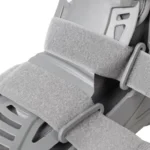
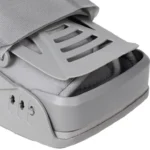
Description
What Is a Short Walking Boot?
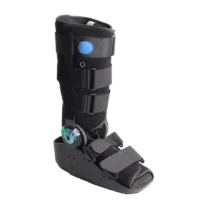
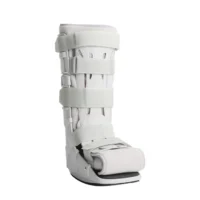
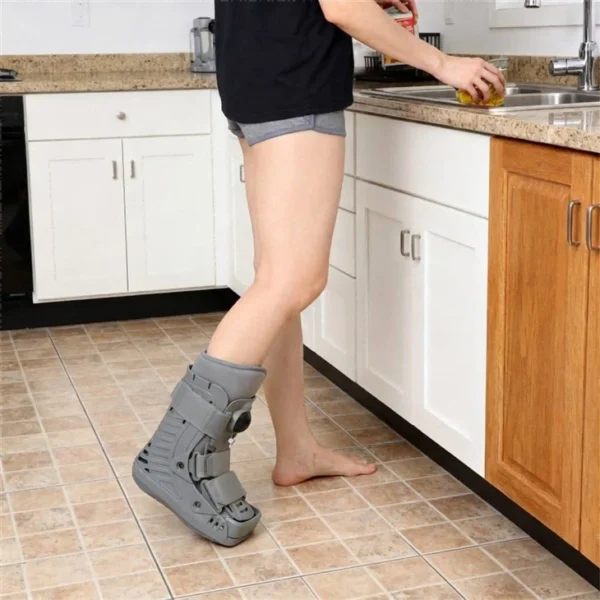
A short walking boot is a rigid walker that ends below mid-calf, so it supports the ankle and the foot without enclosing the lower leg. That shorter shell is what makes it easier to put on, cooler to wear and less of an obstacle when you are learning to walk in protection again. Model WK-003 is an 11-inch power walking boot with an air cushion and a rocker sole, in sizes S to XL. It is not the tall 17-inch version, and it is not a compression support or an ankle brace.
Why Choose This Low Profile Walking Boot?
Stays put. So you can forget it’s there. That sentence is the design brief behind this short walking boot, and it matters most in a low-profile shell, because a boot that shifts around a healing ankle is felt on every step. An analysis of 1,058 knee-brace reviews and community threads found the most common complaint was a support that slides down while you walk (109 mentions), followed by heat and itching (77), over-tightening and pressure on the calf (65) and unreliable sizing (64).
Four design decisions answer those complaints directly.
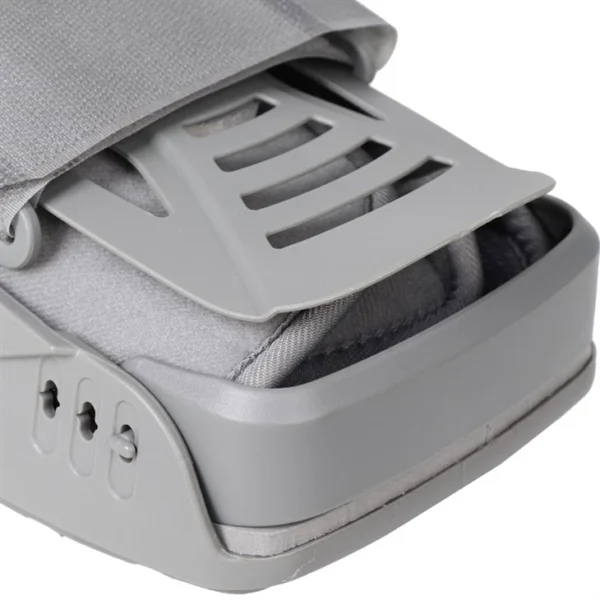
- 11-Inch Low-Profile Shell: The frame ends below mid-calf, so the calf stays free and the boot stays light — a short walking boot you can keep on through a working day rather than only around the house.
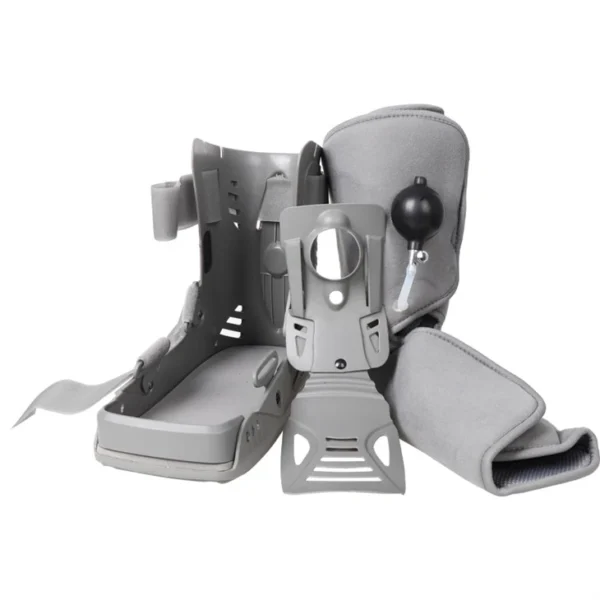
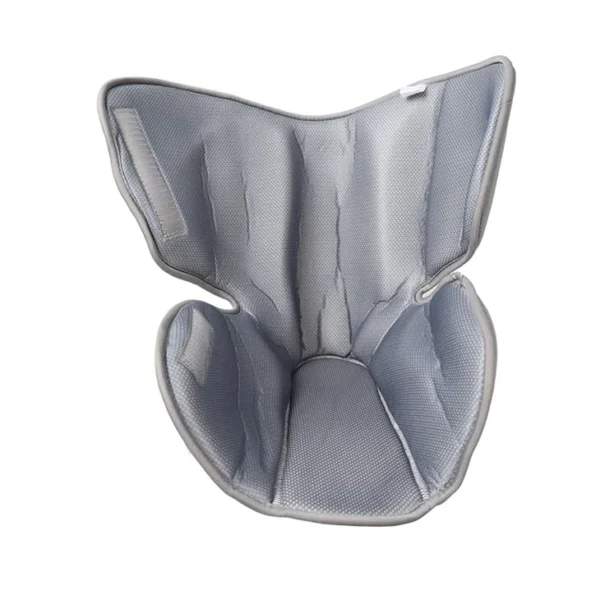
- Inflatable Air Cells: The air cushion inside the shell can be inflated to hold the ankle evenly and help reduce swelling, which is exactly what a protected foot needs in the first weeks after an injury.
- Rocker Sole: The curved sole rolls the foot forward through the step, so walking in the boot is a rolling motion instead of a stiff flat-footed shuffle.
- Fits Left or Right, Four Sizes: One model covers either foot across sizes S to XL, so a clinic or a distributor carries one line instead of two.
Premium Engineering & Design Details
Every value below applies to model WK-003, the 11-inch short walking boot in this listing.
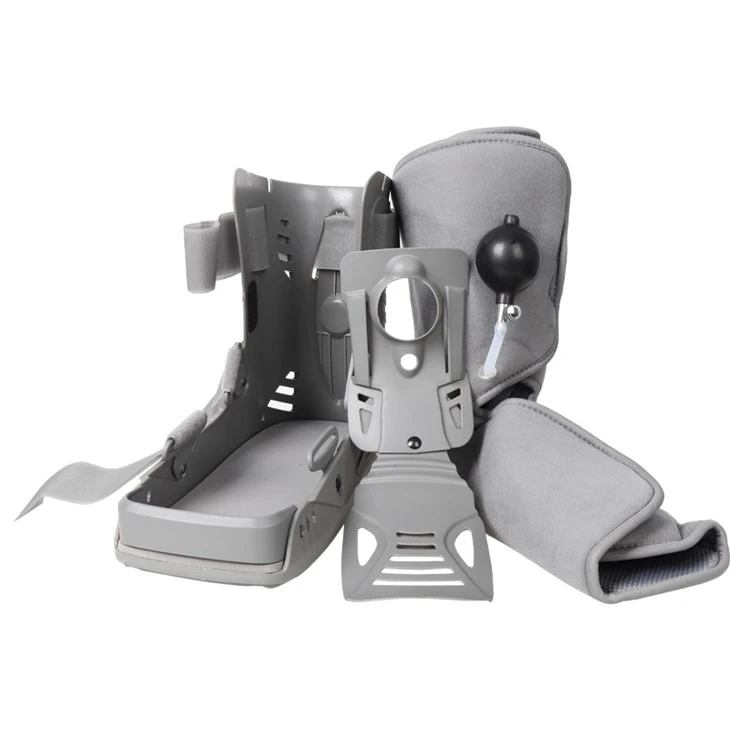
Strategic Advantage Over Standard Medical Footwear
Compared with a standard short walking boot, four structural differences matter most.
- Low Profile, Not Compromised: Cutting the shell below mid-calf removes bulk without giving up ankle control, so a short walking boot stays usable on stairs and in a car.
- Pressure That Can Be Adjusted: An inflatable cushion can be softened when the ankle is swollen and firmed once it settles, instead of relying on strap tension alone.
- A Sole Designed for Recovery Walking: The rocker shape reduces the effort of each step, which matters when the leg is carrying a boot instead of a shoe.
- A Narrow, Predictable Range: Four sizes and either foot, with carton and weight data published per size, so inventory planning is straightforward.
Two honest limitations. First, this is the short 11-inch shell: if your clinician wants the lower leg enclosed, choose the tall 17-inch design instead. Second, a walking boot protects the limb; it does not decide how much weight you may put through it or when you may stop using it, and those instructions come from your surgeon or physiotherapist.
OEM and ODM programmes are available for distributors and private-label brands, including custom colours, logo printing and packaging design.
Best For: Foot & Ankle Fracture Recovery
This short walking boot is intended for the situations below.
- Grade II and grade III ankle sprains
- Stable fractures of the fibula, talus, calcaneus and medial malleolus
- Forefoot and midfoot injuries where the foot needs protection while it heals
- Post-operative fixation after Achilles tendon rupture repair
- Recovery after ligament, soft-tissue and tendon surgery
- Replacing a long period in a cast, so the ankle can be inspected and exercised as healing allows
The American Academy of Orthopaedic Surgeons (AAOS) patient information on ankle fractures explains that a nondisplaced medial malleolus fracture can be treated with a short leg cast or walking boot, that a nondisplaced lateral malleolus fracture can often be treated the same way and that many isolated lateral malleolus fractures are stable enough to allow weight-bearing, and that most ankle fractures take at least six weeks for early healing and ten to twelve weeks for complete healing.
Browse the full range of walker boots, or see our short cam walker boot if you need a fixed shell instead of an air cushion.
Sizing & Fitting Guide (11″ Short Leg)
This short walking boot is an 11-inch shell in four sizes, and it fits either foot.
Fitting in three steps: seat your heel at the back of the shell and check that your toes sit clear of the front edge; close the straps from the ankle upward so the foot cannot slide forward; then inflate the air cushion only until the ankle feels evenly held.
Check the straps after the first ten minutes of walking. A short walking boot that has been fastened while the foot was cold will feel loose once the ankle warms, and the air cushion should be released before the boot is taken off.
Frequently Asked Questions (FAQ)
What is a short walking boot used for? It protects the ankle and foot after a stable fracture, a severe sprain or surgery. The AAOS notes that nondisplaced ankle fractures can be treated with a short leg cast or walking boot, and a short walking boot is the choice when the lower leg does not need to be enclosed.
Is the air cushion included? Yes. The inflatable air cells are part of this model. Inflate them only until the ankle feels evenly supported, and release air if the foot feels squeezed or the toes change colour.
How is this different from the tall model? Height. A short walking boot ends below mid-calf and leaves the calf free, while a tall boot supports more of the lower leg. Ask your clinician which height matches your injury.
How much weight can I put on it? That is a clinical decision. Many ankle fractures treated in a boot allow weight-bearing, but your surgeon or physiotherapist sets the limits for your injury and the stage of healing, so follow those instructions exactly.
Which size should I order? Sizes run S to XL and the boot fits either foot. The heel has to seat at the back of the shell with the toes clear of the front, so choose by foot length first and then check that the straps still have adjustment left.
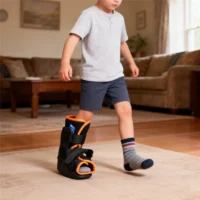
Can I wear it all day? The low-profile shell and hook-and-loop closure are designed for daily wear, and the air cushion can be softened as swelling settles. Build up gradually, keep the liner clean and dry, and check the skin at the end of the day.
Medical Disclaimer
This product is intended for general orthopedic stabilization and support purposes only. It does not constitute personalized medical advice. Always consult your primary healthcare provider, orthopedic specialist, or physical therapist to ensure this device is appropriate for your specific injury, rehabilitation schedule, and weight-bearing status before use.