


Description
What Is a Pediatric Walking Boot?
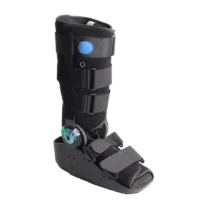
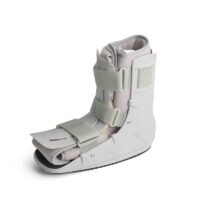
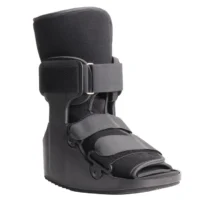
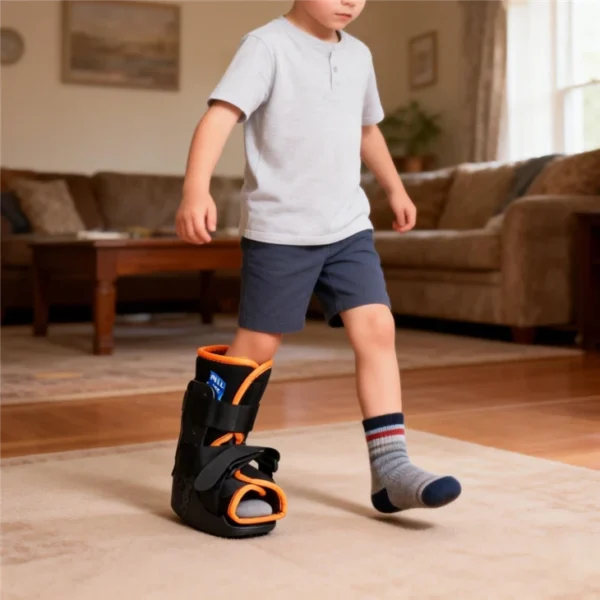
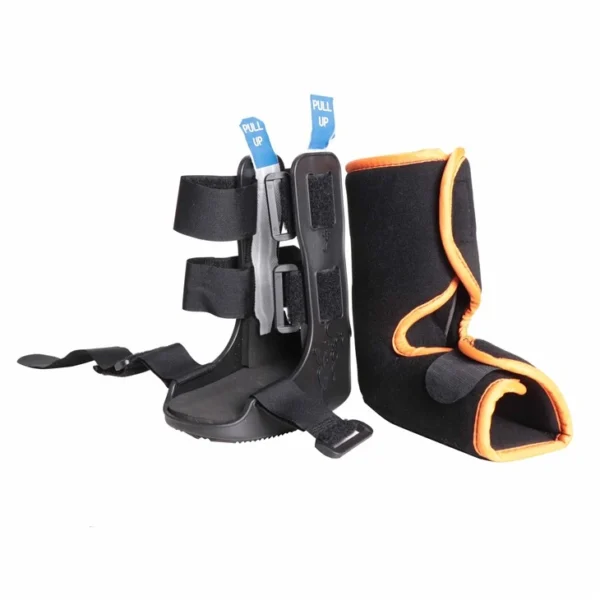
A pediatric walking boot is a rigid brace sized for a child’s foot, used instead of a plaster cast to hold the ankle and foot still while a fracture, a sprain or a surgical repair heals.
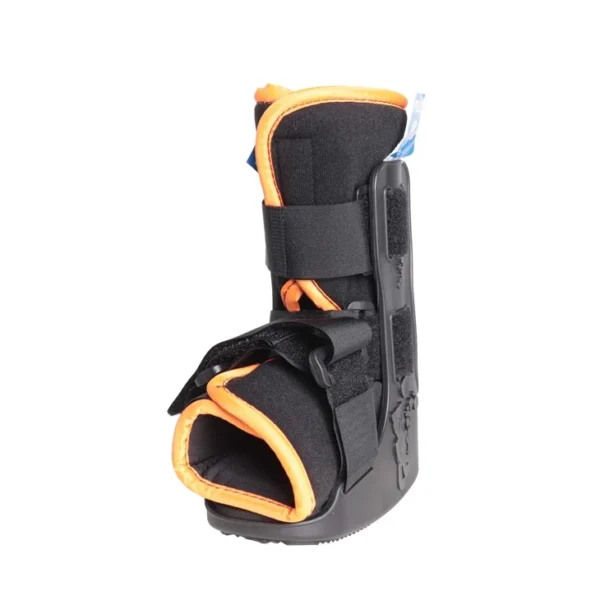
This one is built around a moldable metal stay inside a rigid shell that mimics the effect of a cast, with a removable foam liner that fits a foot length of 15.2 to 20.3 cm and three stackable heel wedges for staged Achilles stretching. It is not a plaster cast, not a compression ankle sleeve, and not an adult boot in a smaller box.
Why Choose This Kids’ Walker?
Stays put. So you can forget it’s there. That matters more with a child than with an adult, because a pediatric walking boot has to survive a full day of school, play and travel without becoming something the child tries to take off.
The shell is sized down to child foot lengths rather than simply shrunk from an adult last, and the unit weight starts at 303 g, which is under a third of the lightest adult boot in this range. Three sizes cover the range, and the fit is set from the measured foot length rather than from an adult shoe size.
- Sized for children, not shrunk for them: The three shells cover a foot length of 15.2 to 20.3 cm, and the internal dimensions of each size are listed below so the fit can be checked against a measured foot.
- Moldable metal stay in a rigid shell: The stay and shell mimic the effect of a plaster cast, restricting abnormal ankle movement to prevent reinjury while still allowing the boot to come off.
- Three stackable heel wedges: Three layers of heel wedge can be removed one at a time as healing progresses, which gives a pediatric walking boot a staged stretch for the Achilles rather than a single fixed position.
- Ventilated, washable liner: Ventilation holes in the shell reduce sweating for long-term wear, and the removable foam liner is machine-washable — a practical point when the wearer is a child.
Premium Engineering & Design Details
Every value below applies to model WK-017, the pediatric walking boot in this listing.
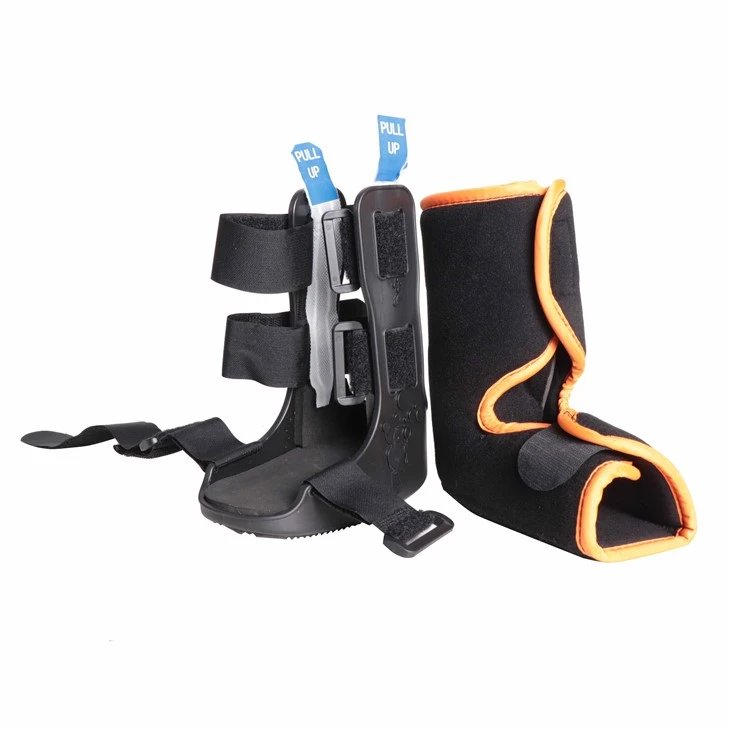
Moldable Shell & Stackable Heel Wedges
Two features do most of the work in this brace. The first is the combination of a moldable metal stay and a rigid shell, which mimics the effect of a plaster cast: abnormal ankle movement is restricted, which lowers the risk of reinjury, but unlike a cast the boot comes off, so the foot can be checked and the liner washed. The second is the heel wedges. Three stackable layers sit under the heel, and removing them one at a time progressively lowers the heel for Achilles stretching and for restoring joint mobility.
In practice, a pediatric walking boot is used the way a cast is used, but in stages. It replaces a traditional cast so early weight-bearing training can begin sooner, and the guidance on the wear schedule and on when each wedge comes out has to come from the treating clinician rather than from the boot. Before each use, check that the straps and buckles are seated and that the liner is dry, since a wet liner inside a closed pediatric walking boot is the fastest way to make the child want it off.
Best For: Children’s Ankle & Foot Recovery
This pediatric walking boot is intended for the clinical situations below. Final suitability is a clinical decision, and the boot is supplied for use under medical guidance.
- Immobilisation after a fracture, a ligament tear or an Achilles rupture
- Moderate to severe ankle sprains in children
- Rehabilitation of a tibiofibular fracture
- Support after ankle surgery, including arthroscopy and fusion
- Early weight-bearing training in place of a traditional cast, where the clinician has permitted it
- Staged Achilles stretching and joint mobility work using the removable heel wedges
For context on how ankle fractures are classified and treated, the American Academy of Orthopaedic Surgeons notes that a short leg cast or a walking boot is a standard treatment for many stable ankle fractures, and that isolated lateral malleolus fractures are often stable enough to allow weight bearing.
See the AAOS patient information on ankle fractures for how these injuries are assessed. One limit belongs in plain language: a pediatric walking boot protects the joint, but it cannot decide how much weight the child may put through it — that instruction has to come from the treating clinician.
Sizing & Fitting Guide (S–M–L)
There is no separate left or right to order. This model is made in three sizes covering a foot length of 15.2 to 20.3 cm, so the fit of a pediatric walking boot is set from a measured foot length and then confirmed by the clinician. The internal dimensions and unit weight of each shell are listed below.
Measure the child’s foot from the heel to the tip of the longest toe in a thin sock and compare it with the internal length of the shell. Then put the foot in, fasten the straps, and confirm the position of the heel wedges with the treating clinician.
Three practical notes. All three sizes ship in the same 57 × 36 × 42 cm carton, with the number of pieces falling from 30 to 20 as the shell grows, so a mixed order packs predictably. The unit weight rises from 303 g to 450 g across the range. And because a pediatric walking boot is worn through a growth period, re-check the fit at follow-up appointments rather than assuming the size bought at the start is still right at the end.
Who It’s For — and Who It Isn’t
This pediatric walking boot is built for children who need cast-like protection but not a cast: the foot has to stay protected, and it also has to be checked, cleaned and adjusted as the child grows.
- A good match when the injury is stable, the treating clinician has permitted the boot instead of a cast, and the foot length falls between 15.2 and 20.3 cm.
- A good match when staged Achilles stretching or progressive heel lowering is part of the plan, since the three wedge layers can be removed one at a time.
- A good match when the boot has to come off for school, bathing or appointments, and the liner needs washing regularly.
- Not the right choice when the fracture is unstable or has not been cleared for weight bearing — a pediatric walking boot does not replace surgery or a rigid cast in those cases.
- Not the right choice when the foot has outgrown the largest internal length here, which needs an adult shell instead. Browse the full walker boots range to compare sizes.
Frequently Asked Questions (FAQ)
What age is a pediatric walking boot for? It is sized by foot length rather than by age: the three shells together cover 15.2 to 20.3 cm from heel to longest toe. Measure the foot first, then confirm the size with the treating clinician, because a pediatric walking boot that is too large will not hold the ankle properly.
Can it replace a cast? That is its purpose. A moldable metal stay inside a rigid shell mimics the effect of a cast and restricts abnormal ankle movement, but unlike a cast it can be removed, so the skin can be checked, the liner washed, and the heel wedges changed as healing progresses. Whether it should replace a cast in a particular case is a clinical decision.
How do the heel wedges work? Three stackable layers sit under the heel. Removing them one layer at a time progressively lowers the heel, which stretches the Achilles tendon and helps restore joint mobility. The schedule for removing each layer comes from the treating clinician.
Is the liner washable? Yes. The foam liner is removable and machine-washable, which matters for a boot that a child wears all day. Let the liner dry fully before the pediatric walking boot goes back on, since a damp liner inside a closed shell is uncomfortable and works against the ventilation holes built into a pediatric walking boot.
Does it fit either foot? Yes, the design does not require a separate left or right version. Confirm the position on the foot with the clinician when the boot is first fitted.
Can the child walk in it? Walking is part of the point: replacing a traditional cast with this brace is intended to allow early weight-bearing training and to help maintain muscle while the joint heals. How much weight the child may take, and when, is an instruction from the treating clinician rather than a product feature of the pediatric walking boot.
⚠️ Medical Disclaimer
This product is intended for general orthopedic stabilization and support purposes only. It does not constitute personalized medical advice. Always consult your primary healthcare provider, orthopedic specialist, or physical therapist to ensure this device is appropriate for your child’s specific injury, rehabilitation schedule, and weight-bearing status before use.