Description
What Is a Medical Moon Boot?
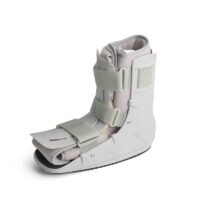
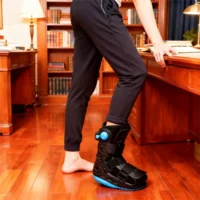
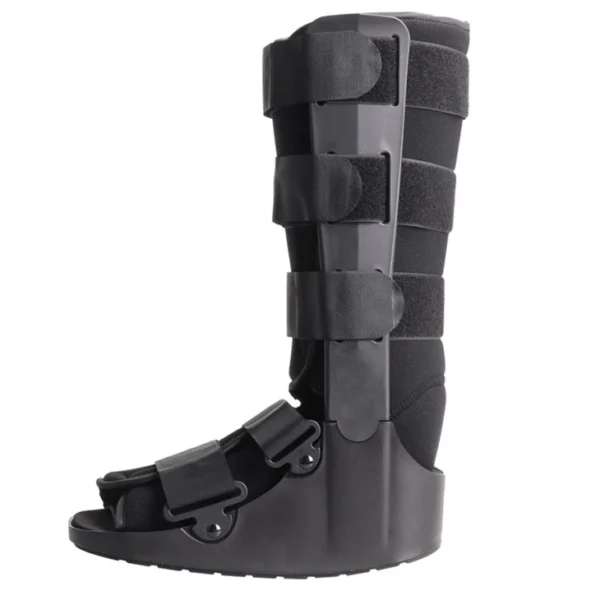
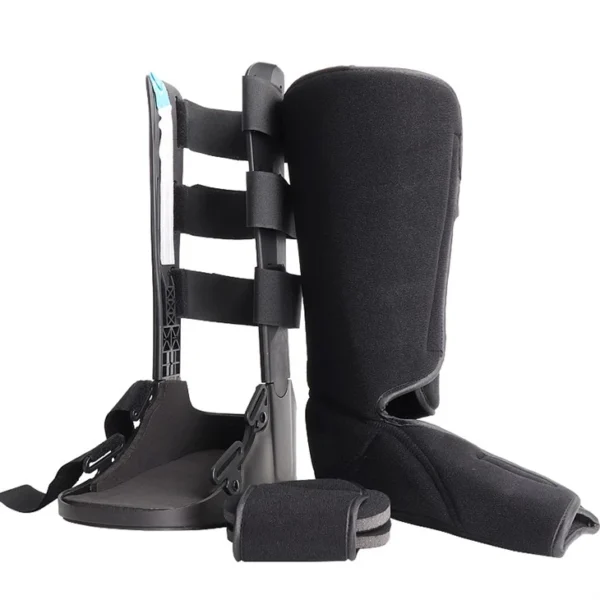
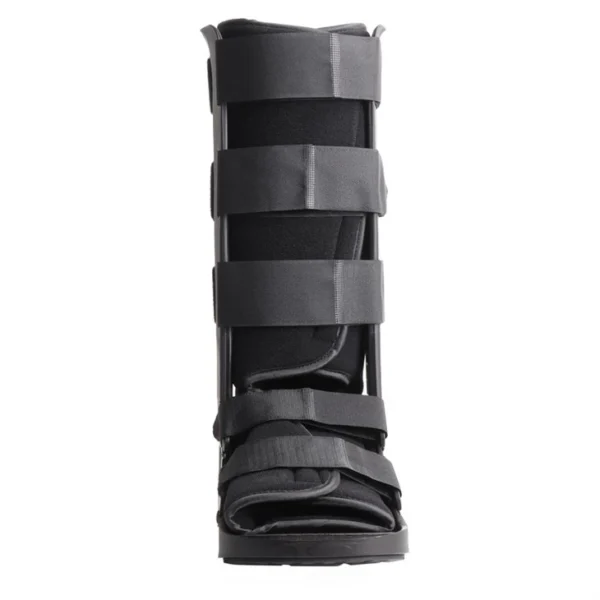
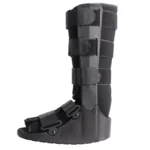
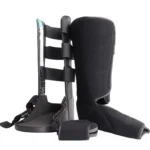
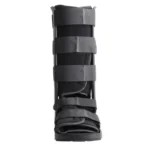
A medical moon boot is the tall, fully enclosed walking boot that protects the lower leg, ankle and foot while an injury or a surgical repair heals. The nickname comes from the rounded shape, but the function is practical: a rigid shell holds the limb still and cushions it so you can walk in protection instead of staying off the leg entirely. Model WK-007 is a 17-inch medical moon boot with dual bladders built into the foot, a full shell and an anti-slip base, in sizes XS to XL. It is not a short boot, and it is not a fixed CAM shell.
Why Choose This Dual Bladder Walking Boot?
Stays put. So you can forget it’s there. That sentence is the design brief behind this medical moon boot, and it matters most in a tall shell that is worn for weeks, because pressure that is even at breakfast is not even by the afternoon. An analysis of 1,058 knee-brace reviews and community threads found the most common complaint was a support that slides down while you walk (109 mentions), followed by heat and itching (77), over-tightening and pressure on the calf (65) and unreliable sizing (64).
Four design decisions answer those complaints directly.
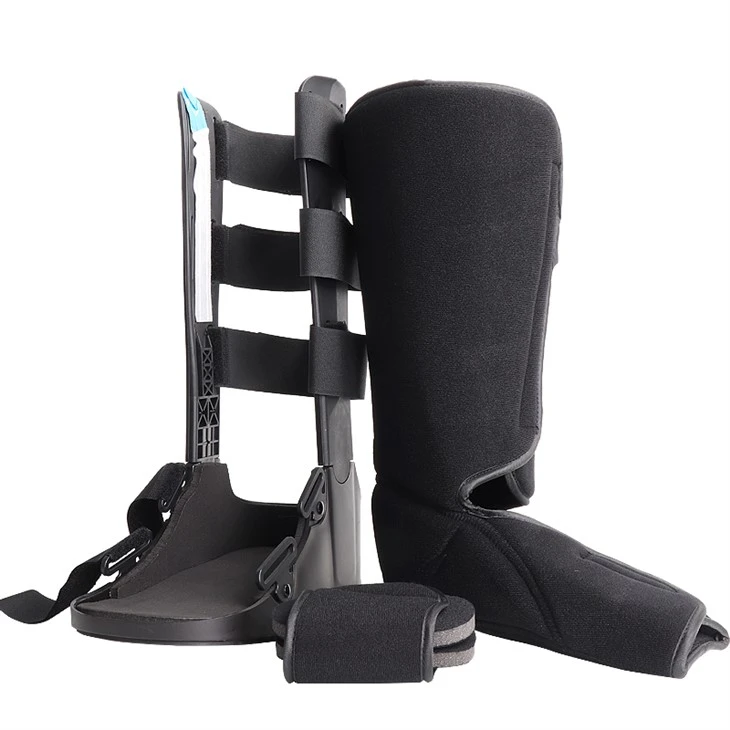
- Dual Foot Bladders: Two integrated air chambers under the foot respond to the way you load the leg, cushioning the sole dynamically and taking pressure off the sensitive areas of a healing foot.
- Full Protective Shell: A complete outer shell in advanced PP with a medical-grade rubber base holds the ankle and foot in position, so the boot supports the limb rather than only covering it.
- Anti-Slip Base: A grip-focused underside that keeps a medical moon boot usable on hospital floors, pavements and wet ground.
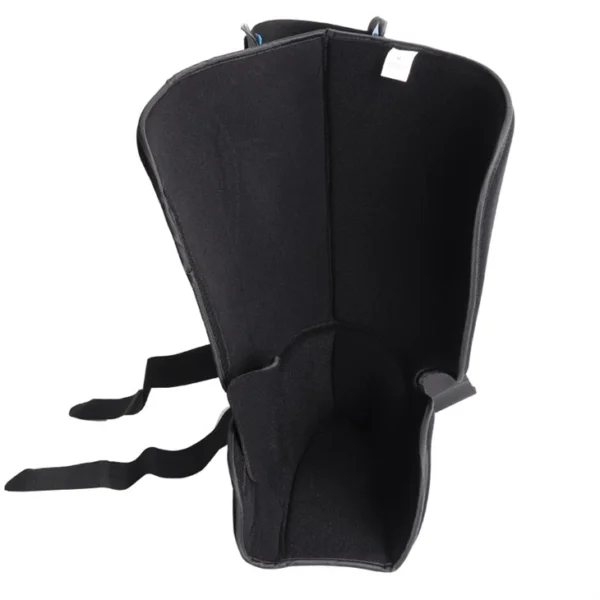
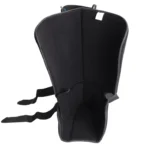
- Breathable Sponge Lining: A ventilated sponge layer between the leg and the shell, because a tall boot that traps heat is one that gets taken off too early.
Premium Engineering & Design Details
Every value below applies to model WK-007, the 17-inch medical moon boot in this listing.
Strategic Advantage Over Standard Orthopedic Walkers
Compared with a standard orthopedic walker, four structural differences matter most.
- Two Bladders Instead of One: A single cushion presses evenly. Dual foot bladders respond to load as it moves across the sole, so a medical moon boot stays comfortable through a longer walk.
- Full Shell Coverage: The boot encloses the lower leg as well as the foot, which gives more rotational control than a low shoe-style design.
- Cushioning That Targets the Sensitive Areas: Because the air chambers sit under the foot, the pressure relief lands where a healing fracture or repair actually feels it.
- Breathability Built In: The breathable sponge layer is a deliberate choice for weeks of wear, not a detail for a specification sheet.
Two honest limitations. First, this is a fixed-shell design: it has no hinge and no angle settings, so if your protocol calls for controlled movement, choose a ROM boot instead. Second, this medical moon boot protects the limb but does not determine how much weight you may take or how long you need it for; those are clinical decisions, and they should be followed exactly.
OEM and ODM programmes are available for distributors and private-label brands, including logo, packaging and specification development.
Best For: Ankle & Foot Fracture Recovery
This medical moon boot is intended for the situations below.
- Grade II and grade III ankle sprains that need protection while they settle
- Stable fractures of the fibula, talus, calcaneus and medial malleolus
- Forefoot and midfoot injuries where the foot must be kept still
- Post-operative fixation after Achilles tendon rupture repair
- Recovery after ligament, soft-tissue and tendon surgery
- Surgery on a torn ligament, where a protected period of walking is part of the plan
The American Academy of Orthopaedic Surgeons (AAOS) patient information on stress fractures of the foot and ankle explains that most stress fractures are caused by overuse and repetitive activity, that temporarily avoiding high-impact activity is key because returning too quickly can delay healing or risk a complete fracture, and that treatment often includes protective footwear such as a removable short-leg fracture brace shoe. It also notes that healing typically takes six to eight weeks.
Browse the full range of walker boots, or see our tall walking boot if you prefer the same 17-inch coverage with a foam liner.
Sizing & Fitting Guide (17″ Tall Height, XS–XL)
This medical moon boot is a 17-inch shell in five sizes, and it fits either foot.
Fitting in three steps: seat the heel at the back of the shell so the toes sit clear of the front; close the straps from the top downward and check that the leg is held without pressure points; then let the dual bladders settle under the foot as you take your first steps rather than adding or releasing air straight away.
Give the air chambers a few minutes of walking before you judge the fit. A medical moon boot is usually adjusted too firmly on the first attempt, and the comfortable setting is the one you reach after the foot has warmed and the bladders have taken up their shape.
Frequently Asked Questions (FAQ)
What is a medical moon boot used for? It protects the lower leg, ankle and foot while a fracture, a sprain or a surgical repair heals, and it lets you walk in protection. A medical moon boot is the tall, fully enclosed type, usually worn for several weeks.
What are the dual bladders for? They sit under the foot and cushion the sole as load moves across it. Two chambers respond to the walk cycle better than one, which makes the boot more comfortable over a longer distance.
Does it have a hinge or angle settings? No. This is a fixed-shell medical moon boot: the frame holds the limb in one position. Choose a ROM boot if your protocol requires controlled movement in set increments.
Can I walk outside in it? Yes. The anti-slip base is fitted for grip on pavements and indoor floors. Take care on stairs, slopes and wet surfaces, and follow any weight-bearing instructions you have been given.
Which size should I order? Sizes run XS to XL and the boot fits either foot on this medical moon boot. Fit by foot length first so the heel seats at the back and the toes stay clear of the front, then check that the straps are not at the end of their adjustment.
How long will I need to wear it? That depends on the injury. The AAOS notes that healing of a stress fracture typically takes six to eight weeks, and that most ankle fractures take at least six weeks of early healing. Your own schedule will be set around follow-up imaging.
Medical Disclaimer
This product is intended for general orthopedic stabilization and support purposes only. It does not constitute personalized medical advice. Always consult your primary healthcare provider, orthopedic specialist, or physical therapist to ensure this device is appropriate for your specific injury, rehabilitation schedule, and weight-bearing status before use.