

Description
What Is a 90 Degree Night Splint?
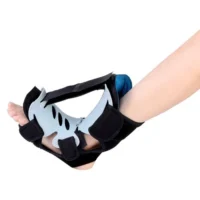
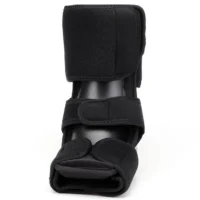
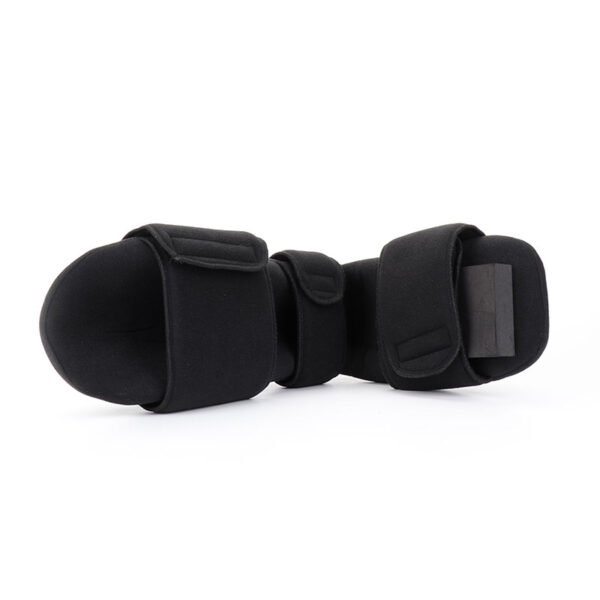
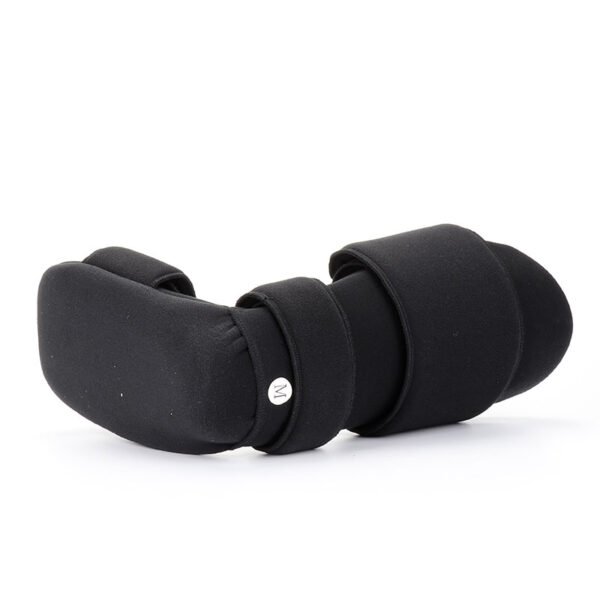
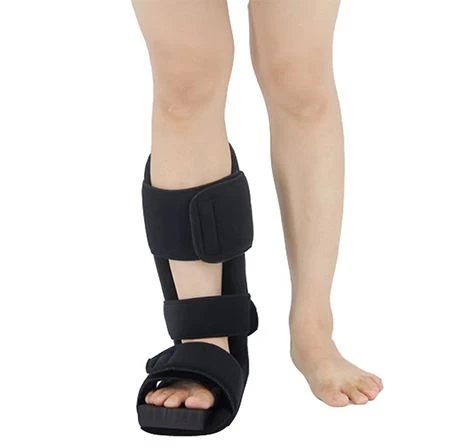
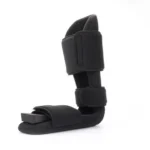
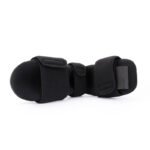
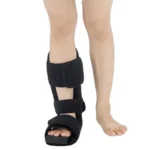
A 90 degree night splint is a rigid overnight brace with a moulded body that holds the foot at the right angle to the lower leg while you sleep, rather than supporting it with fabric alone. Model AN-010 is built around a 90-degree foot support design: a moulded orthosis carries the foot, soft material sits against the skin, and the fit adjusts to different leg shapes. It is an in-bed positioning device. It is not a walking device, and it is not a soft fabric wrap.
Why Choose This Rigid Overnight Splint?
Stays put. So you can forget it’s there. The reason a rigid overnight brace gets left in the cupboard is weight and pressure, not stiffness. A heavy shell is uncomfortable by the second hour, and a hard edge against the skin becomes the only thing you can think about.
This model is specified the other way round: the body is described as a lightweight structure that reduces the wearing burden, the material against the skin is specified as soft for comfortable contact, and the fit adjusts so the same geometry can be set on different leg shapes. A 90 degree night splint holds the position because the body holds it, which is the difference between a rigid device and a wrap that loosens overnight.
- 90-degree foot support design: The foot is carried by the orthosis at a right angle to the lower leg instead of a soft wrap.
- Soft contact material: The surface against the skin is specified as soft, so a long overnight session in a 90 degree night splint stays comfortable.
- Lightweight structure: The frame is built to reduce the wearing burden, which is what determines whether the brace is still on at 4 a.m.
- Adjustable fit for different leg shapes: The closure can be reset for a slimmer or fuller calf without changing sizes.
- Stable foot positioning: A supportive night splint structure designed to hold the foot in one position through the night.
- Either foot: The same splint fits the left and the right leg.
Premium Engineering & Design Details
Every value below applies to model AN-010, the 90 degree night splint in this listing.

The 90 Degree Foot Support Design & Wedge Positioning
The number in the name is the point of the design. A 90 degree night splint holds the foot square to the lower leg — the position it would be in if you stood flat on the floor — instead of letting it drop toward the pointed position that most sleepers end up in. That is the whole reason a rigid body is used here.
Fabric can hold a foot gently, but it cannot hold an angle; a moulded orthosis can, because the shape of the body is the shape of the position. Underneath the foot, a wedge pad gives the sole a surface to sit against, so the position is set by the geometry of the device rather than by how tightly the straps are pulled.
Practically, that changes how you fit it. There is no “tight enough to hold the angle” setting on this kind of brace: you close the fastening until the leg is held without pressure points, and the angle comes from the body of the splint.
Because the fit is adjustable, the same 90 degree night splint can be set on different leg shapes, and the closure can be eased without losing the foot position. If you wake with numbness, pins and needles or a burning spot, the fastening is too tight — loosen it and check the skin after the first nights.
Best For: Fracture, Sprain, Foot Drop & Stretch Support
This 90 degree night splint is intended for the situations below. The manufacturer’s page for this model states an application list; the items below are quoted from it as the manufacturer’s stated applications rather than as clinical claims.
- Ankle and lower leg fracture rehabilitation support
- Ankle and lower leg sprain support
- Prevention of foot drop in long-term bedridden patients
- Plantar fasciitis and Achilles tendon stretching support
- Night-time foot positioning during prolonged bed rest
- Early plantar flexion contracture and pronation-related support — the position the foot drifts into when it is never brought back up
The American Academy of Orthopaedic Surgeons describes the same principle in plain language: night splinting helps morning pain by holding the foot with the toes pointing upward while you sleep, which maintains calf flexibility and reduces the pull of the Achilles tendon on the heel. See the AAOS patient information on Achilles tendinitis for where that fits into a treatment plan. Two limits belong in plain language.
First, an overnight splint is a positioning device: it does not bear weight, and it is not a substitute for a cast, a boot or a brace prescribed after surgery. Second, a rigid 90 degree night splint is not for every foot — if the joint cannot be brought to that position comfortably, the right device is a different one, and that call belongs with your clinician.
Sizing & Fitting Guide (S · M · L)
Three sizes, one shape of position. Because the body of this 90 degree night splint sets the angle, the size decision is about matching the splint to the leg rather than about choosing how much stretch you want.
Loosen the fastening fully, place the heel into the body of the 90 degree night splint so the sole rests against the wedge pad, then close the closure until the leg is held without pressure points. Check the top of the foot and the back of the heel after the first night.
Two practical notes for a rigid splint. Start with a shorter session on the first nights — a 90 degree night splint feels unfamiliar before it feels comfortable, and building up is easier than pushing through. And if the position cannot be reached without discomfort, stop rather than forcing it: the angle should come from the shape of the device, not from tightening.
Who It’s For — and Who It Isn’t
This 90 degree night splint suits the leg that needs its foot position controlled through the night rather than supported during the day.
- A good match when the foot needs to be held square to the lower leg overnight — for example during recovery from a fracture or a sprain, or while on prolonged bed rest.
- A good match when a stretching routine for the plantar fascia or the Achilles tendon has been prescribed and the overnight position needs to hold too.
- A good match when a fabric night wrap has not held its position, and a rigid body that sets the angle is needed.
- Not the right choice when the ankle has to be immobilised for weight bearing, or after surgery — a cast, a boot or a brace prescribed by the surgeon is the appropriate device for that phase, and a 90 degree night splint is not.
- Not the right choice if the ankle cannot comfortably reach the position the splint holds, or if there is broken skin, poor circulation or a nerve problem in the foot. Browse the full ankle and foot braces range for softer overnight options.
Frequently Asked Questions (FAQ)
Is a rigid splint harder to sleep in than a soft one? Printed rigid devices take an adjustment period, while soft wraps are easier on the first night but can lose position. The trade is straightforward: a 90 degree night splint holds the angle it was fitted at, and this model is specified with a lightweight body and a soft contact surface to make that easier to live with.
How long should I wear it each night? That is a clinical decision, and it depends on why the foot position is being controlled. The common approach is to build up over the first nights rather than going straight to a full night, but your clinician should set the schedule.
Can I walk or stand in it? No. This is an in-bed positioning device and it is not designed to bear weight. Walking in a night splint is unsafe, and a walking boot is a different product for a different phase.
Do I wear a sock underneath? A thin, seam-free sock is usually the comfortable choice, because it reduces rubbing against the contact surface and lets you check the skin afterwards. Check the top of the foot, the heel and the calf after the first few nights.
Will the angle stay where I set it? Yes — that is the point of the moulded body on a 90 degree night splint. You adjust the closure for comfort, not for the angle, and the shape of the orthosis is what holds the foot position.
How do I clean it? Wipe the moulded body with a damp cloth and mild soap, hand-wash the padded and velvet parts in cool water, and air-dry everything away from direct heat. Close the fastening before washing so it does not catch on the lining.
⚠️ Medical Disclaimer
This product is intended for general orthopedic stabilization and support purposes only. It does not constitute personalized medical advice. Always consult your primary healthcare provider, orthopedic specialist, or physical therapist to ensure this device is appropriate for your specific injury, rehabilitation schedule, and weight-bearing status before use.