

Description
What Is an Adjustable Dorsal Night Splint?
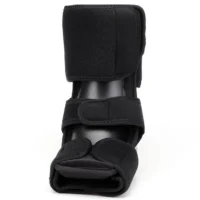
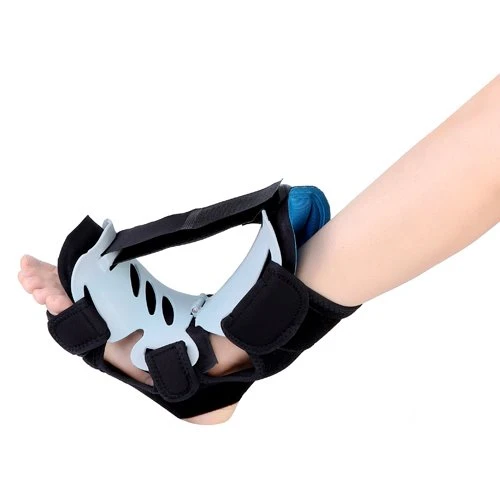
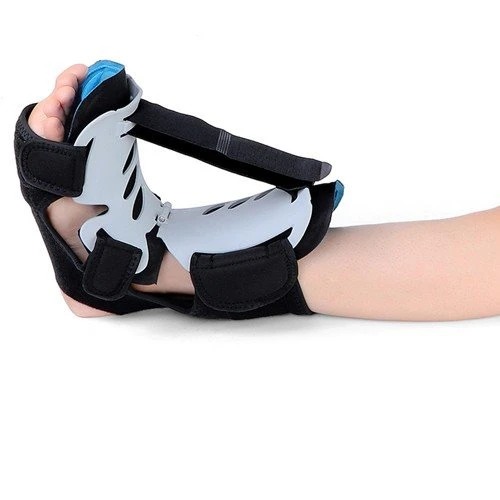
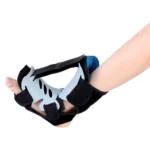
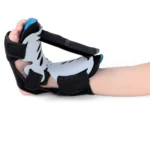
An adjustable dorsal night splint is a padded brace worn in bed that holds the foot in dorsiflexion overnight, so the plantar fascia and the Achilles tendon stay under a gentle stretch instead of shortening while you sleep. This model differs from a fixed night splint in two ways: the dorsiflexion straps can be adjusted as tolerance improves, and a malleable steel plate runs along the shell to hold the ankle in place. Model AN-002 is supplied for use under medical guidance, and it is not a daytime brace or a walking boot.
Why Choose This Adjustable Splint?
Stays put. So you can forget it’s there. That matters most for an adjustable dorsal night splint, because it is worn through the whole night: a splint that is set too tight on the first night gets pushed off by three in the morning, and a splint that is too loose stops stretching anything. Adjustability is what makes the difference between a brace that survives a full course of treatment and one that is abandoned in the first week.
- Adjustable dorsiflexion straps: The stretch can be set low for the first nights and increased gradually, so the calf is not asked to accept the full position immediately.
- Heel lock system: The heel is anchored first, which stops the foot sliding down inside the shell of an adjustable dorsal night splint overnight.
- Triangular stability design: The frame holds the ankle joint in a neutral position rather than letting it roll to one side as the foot relaxes.
- Malleable steel plate: A plasteel bar along the shell holds the ankle in place, so an adjustable dorsal night splint maintains the position by structure and not only by strap tension.
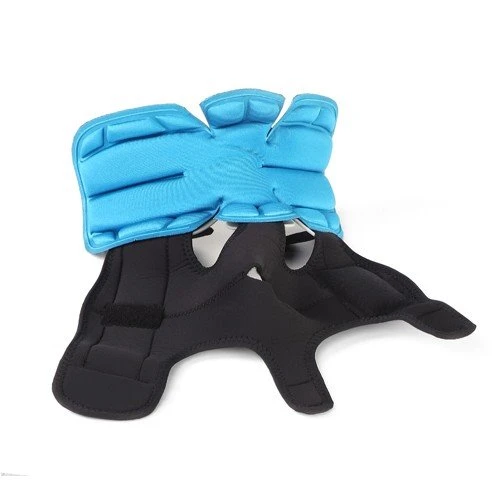
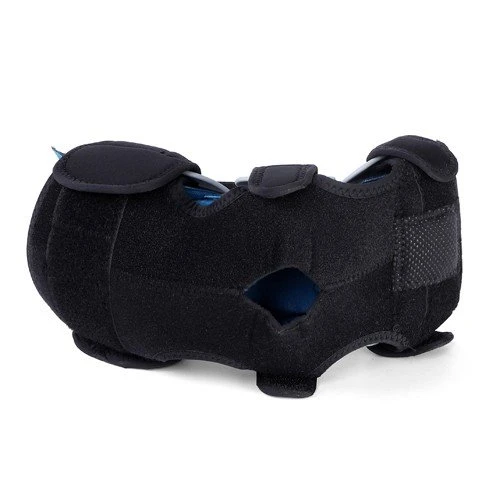
- Elastic neoprene wrap: Neoprene surrounds the foot to spread pressure and keep the splint comfortable against the skin.
Premium Engineering & Design Details
Every value below applies to model AN-002, the adjustable dorsal night splint in this listing.
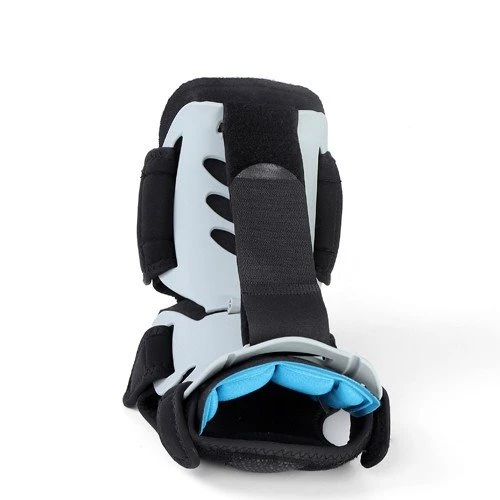
Triangular Frame & Malleable Steel Plate
Most night splints hold the foot using straps alone, and straps loosen as the calf relaxes. This adjustable dorsal night splint adds two structural elements to that job. The triangular stability design keeps the ankle in a neutral position, so the foot does not roll inward or outward as you sleep, and the bionic plate stabilises the ankle in both directions.
The malleable steel plate then runs along the shell: because it can be bent and re-bent, the splint can be shaped to the individual leg, and it holds the position mechanically rather than relying on how tightly the straps are set.
In practice the two mechanisms of an adjustable dorsal night splint are adjusted in a fixed order. Shape the steel plate and seat the heel first, then close the dorsiflexion straps at a low stretch and increase them over the first week. If the foot goes numb, tingles or feels cold, the straps are too tight: loosen them and re-check the heel position before adding anything back.
Best For: Overnight Stretch Support
This adjustable dorsal night splint is intended for the situations below. The manufacturer’s page for this model does not carry a separate indications list; the uses named on that page are metatarsal fasciitis and heel spurs, so those are quoted here as the manufacturer’s stated application rather than as a broader clinical claim. Final suitability is a clinical decision.
- Metatarsal fasciitis, as stated on the manufacturer’s product page
- Heel spurs, as stated on the manufacturer’s product page
- Overnight dorsiflexion stretching where the clinician wants the stretch to be adjustable rather than fixed
- Patients who could not tolerate a fixed night splint because the initial position was too strong
- Use as a positioning aid during rest, with the ankle held in a neutral position
The thinking behind night-time splinting is explained by the American Academy of Orthopaedic Surgeons: most people sleep with the feet pointed down, which relaxes the plantar fascia and is one of the reasons for morning heel pain, and a night splint stretches the plantar fascia while you sleep.
See the AAOS patient information on plantar fasciitis and bone spurs for how the condition is assessed and treated. One limit belongs in plain language: an adjustable dorsal night splint holds the foot in position and provides a sustained stretch overnight; it does not replace stretching, load management or strengthening, and the decision to use one is clinical.
Fit & Sizing Guide
This adjustable dorsal night splint fits either foot, so there is no left or right version to order. The manufacturer offers it in more than one size, and the size that suits you depends on your measured foot length rather than on your shoe size; because the per-size measurements for this model have not been published, we confirm the size against your measured foot length when you enquire rather than asking you to guess from a chart.
Measure from the heel to the tip of the longest toe and compare it with the length of the adjustable dorsal night splint before ordering. Then shape the steel plate, fasten the heel lock, and set the dorsiflexion straps low for the first nights.
One practical note on expectations: because the stretch is adjustable, most of the benefit of an adjustable dorsal night splint comes from using it consistently at a tolerable setting rather than from setting it as tight as it will go. Build the position up over the first week and check the padding and straps at each follow-up.
Who It’s For — and Who It Isn’t
This adjustable dorsal night splint suits the patient who needs an overnight stretch and who has found that a fixed-position splint is either too strong or not shaped to their leg.
- A good match when the clinician has prescribed an overnight dorsiflexion stretch and the patient needs the angle to build up gradually.
- A good match when a previous fixed night splint was abandoned because it was uncomfortable in the first nights.
- A good match when the shape of the leg needs the support plate to be bent to fit, rather than accepting a single factory curve.
- A good match when the foot needs to be held in a neutral position overnight rather than allowed to roll.
- Not the right choice when the ankle has to be immobilised for a fracture or weight bearing has to be controlled — this is a night-time positioning device, not a walking brace. Browse the full ankle and foot braces range for daytime support.
- Not the right choice for walking or daytime activity, or as a substitute for the strengthening work in your rehabilitation plan.
Frequently Asked Questions (FAQ)
How is this different from a fixed night splint? The position is adjustable. On an adjustable dorsal night splint the dorsiflexion straps set the amount of stretch, so it can start low and increase, and the malleable steel plate can be shaped to your leg instead of holding one factory curve.
Can I sleep in it? That is what an adjustable dorsal night splint is designed for. Start with less stretch than you think you need and add a little every few nights; the soft foam padding and the neoprene wrap exist to make a full night tolerable.
Should I wear a sock underneath? A thin, smooth sock usually reduces rubbing under the straps. Avoid heavy textures and seams that can press into the skin.
How tight should the straps be? Tight enough to keep a gentle stretch, not tight enough to cause numbness, tingling or a cold foot. If any of those appear, loosen the straps and re-check that the heel is seated at the back of the shell.
Can the steel plate be re-bent later? Yes. It is malleable, which is the point: it can be shaped at the first fitting and adjusted again if the leg shape or the required position changes.
How long will I need to wear it? That is set by your clinician and depends on your condition. Night splints are typically worn for weeks rather than days, so check the padding and straps along the way rather than treating them as fixed for the whole course.
⚠️ Medical Disclaimer
This product is intended for general orthopedic stabilization and support purposes only. It does not constitute personalized medical advice. Always consult your primary healthcare provider, orthopedic specialist, or physical therapist to ensure this device is appropriate for your specific injury, rehabilitation schedule, and weight-bearing status before use.