




Description
What Is a Knee Brace for PCL Injury?
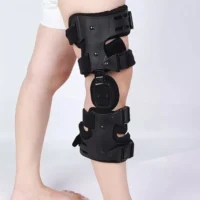
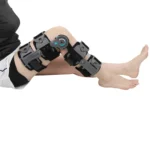
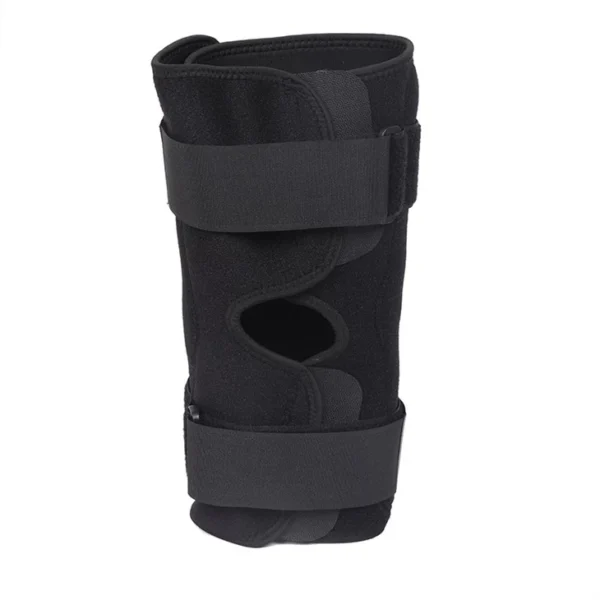
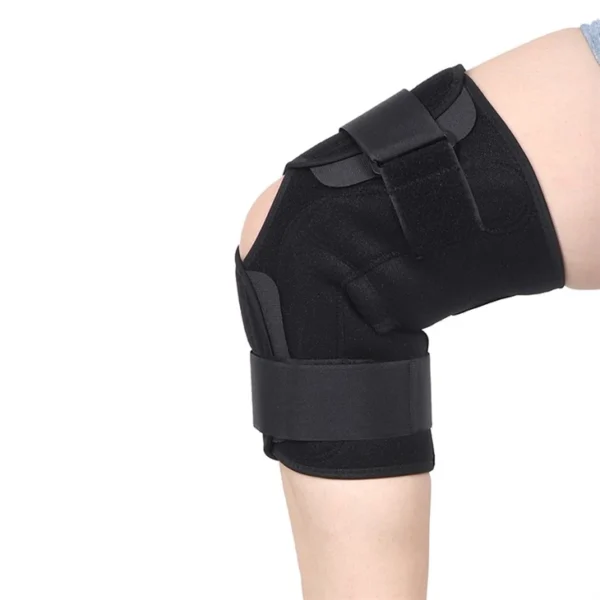
A knee brace for PCL injury is a hinged orthosis that stabilizes the back of the knee joint, where the posterior cruciate ligament sits. Because the PCL keeps the shinbone from sliding backward, the brace has to hold the joint in position as well as limit how far the knee may bend. Model KN-023 uses dial-lock hinges, an open patella design and bilateral side support to do both. It is a ligament support brace: it is not a knee immobilizer, and it is not a compression knee sleeve.
Why Choose This Knee Ligament Brace?
Stays put. So you can forget it’s there. That sentence is the design brief behind this brace, and it matters most for a knee brace for PCL injury, because PCL injuries are frequently treated without surgery and the brace is often worn for weeks while the ligament settles. An analysis of 1,058 knee-brace reviews and community threads found the most common complaint was a support that slides down while you walk (109 mentions), followed by heat and itching (77), over-tightening and pressure on the calf (65) and unreliable sizing (64).
Four design decisions answer those complaints directly.
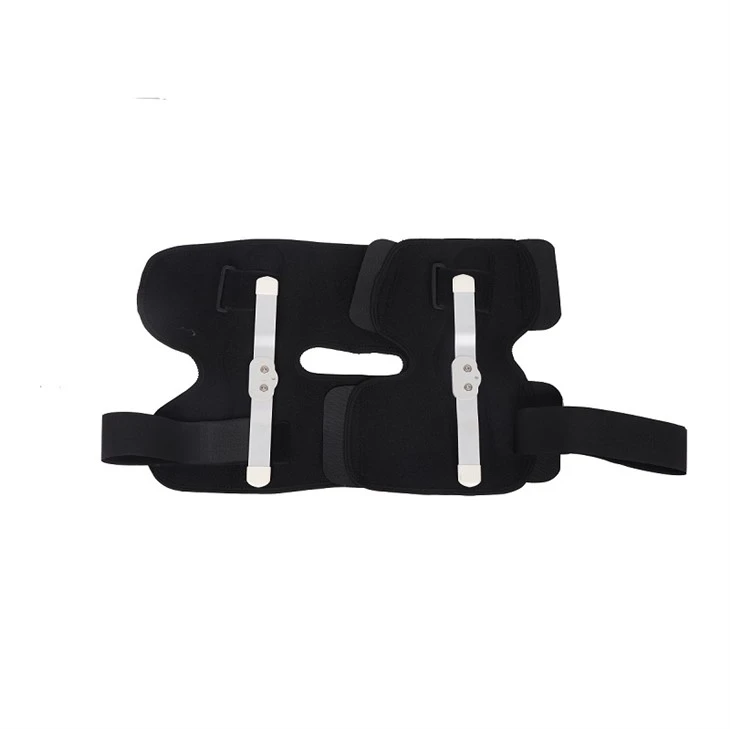
- Bilateral Adjustable Dial-Lock Hinges: Precise dial-lock hinges on both sides of the joint apply adjustable range-of-motion limitation, so the knee is held in a protected position and then allowed to move further as the ligament recovers.
- Open Patella Design: The patella opening keeps direct pressure off the kneecap, which matters because the aim of a knee brace for PCL injury is to control the joint rather than to press on it.
- Bilateral Side Support: Structural support bars along both sides of the knee add medial and lateral stability while the frame still allows controlled flexion and extension.
- Adjustable Length and Hook-and-Loop Straps: The frame length is adjusted to place the hinges on the joint line, and multiple adjustable straps hold it there during walking and rehabilitation exercises.
Premium Engineering & Design Details
Every value below applies to model KN-023, the hinged knee brace for PCL injury in this listing.
Strategic Advantage Over Standard Knee Braces
Compared with a standard knee brace for PCL injury, four structural differences matter most.
- Built Around the Back of the Joint: The PCL is stronger than the ACL and is injured far less often, which is why it is easy to overlook. A brace for the PCL has to hold the joint against backward movement, not only against sideways stress.
- Adjustable Limitation Instead of One Fixed Position: A single-position support becomes useless as the protocol advances. Dial-lock hinges on this knee brace for PCL injury can be reset as the permitted range increases.
- An Open Kneecap: Pressure over the patella is uncomfortable and unnecessary for a ligament on the back of the joint. The open design directs the support to the joint line instead.
- Bilateral Stability: Support on both sides controls the medial and lateral movement that the cruciate ligaments cannot regulate on their own.
Two honest limitations. First, many PCL tears are partial and heal with non-operative treatment, so a brace is one part of a programme that also includes rest, ice and physiotherapy: it does not replace them. Second, a brace cannot repair a complete tear or a combined ligament injury, and surgery may be needed; discuss that with your orthopaedic surgeon.
This model is a Class I orthopedic device produced in Xiamen, China, and OEM and ODM programmes are available for distributors and private-label brands, including logo, packaging and specification development.
Indications: PCL, ACL, LCL & MCL Ligament Support
This knee brace for PCL injury is intended for the clinical situations below.
- Posterior cruciate ligament (PCL) injury, including partial tears managed without surgery, where a knee brace for PCL injury protects the joint while the ligament settles
- Combined ligament injury involving the anterior cruciate, posterior cruciate, lateral collateral and medial collateral ligaments
- Knee rehabilitation programmes where the joint needs supported movement rather than full immobilization
- Patella stabilization and knee instability during walking and daily activity
- Sports and daily knee protection during the return to activity
- Controlled range-of-motion support after ligament surgery, as directed by a clinician
The American Academy of Orthopaedic Surgeons (AAOS) patient information on posterior cruciate ligament injuries explains that the PCL keeps the shinbone from moving backward too far, that PCL injuries rarely come from a simple misstep and usually require a powerful force such as a blow to the front of a bent knee, and that many PCL tears are partial with the potential to heal on their own.
The AAOS also notes that immobilization may be recommended, and that a special knee brace can be used to prevent the tibia from sagging backward, since gravity pulls the bone backward when you are lying down.
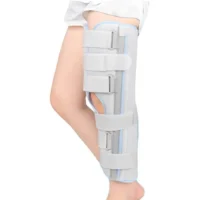
Browse the full range of knee braces, or see our knee immobilizer for the tri-panel full-leg option when full fixation is required.
Sizing & Fitting Guide (Universal Adjustable Fit)
This knee brace for PCL injury ships in a single universal size that adjusts in length and strap tension, and it fits either leg.
Fitting in three steps: slide the frame until each hinge sits level with the centre of your knee joint and the patella opening sits over the kneecap; set the hinge limits as your clinician prescribes; then close the straps from the top strap down and check that the frame does not rotate when you walk.
Check the length setting after the first hour of wear. A knee brace for PCL injury that sits high on the thigh will slide down, and one that sits low will push the hinges below the joint line.
Frequently Asked Questions (FAQ)
What is a knee brace for PCL injury used for? It stabilizes the back of the knee joint and limits how far the knee may move. The AAOS notes that a special brace may be used to keep the tibia from sagging backward when you lie down, because gravity pulls the shinbone in that direction after a PCL injury.
Is a knee brace for PCL injury worn with or instead of surgery? Both situations occur. Many PCL tears are partial and are treated without surgery, with bracing, rest, ice and physiotherapy. Combined ligament injuries, or a knee that stays unstable, may need reconstruction. Your surgeon decides, and the brace settings follow that decision.
How is this different from a knee immobilizer? A knee immobilizer holds the joint at one fixed position. This knee brace for PCL injury has adjustable hinge limits, so it can protect the joint early and allow controlled movement later without changing to a different device. A full-leg tri-panel immobilizer is the alternative when complete fixation is required.
Does it fit either leg? Yes. The model is universal and fits the left or right leg; the frame length and strap tension are adjusted to your leg when it is fitted.
Can I wear it during sport? Ask your clinician when it is safe to return to sport, and follow the guidance you are given. The bilateral side support and open patella design of this knee brace for PCL injury are intended to keep the knee stable, but a brace does not clear you to train.
Will a brace make my knee muscles weaker? A brace supports the joint; it does not replace rehabilitation. The AAOS notes that strengthening the muscles at the front of the thigh is a key factor in a successful PCL recovery, so keep to the exercise programme you have been given and use this knee brace for PCL injury as prescribed.
Medical Disclaimer
This product is intended for general orthopedic stabilization and support purposes only. It does not constitute personalized medical advice. Always consult your primary healthcare provider, orthopedic specialist, or physical therapist to ensure this device is appropriate for your specific injury, rehabilitation schedule, and weight-bearing status before use.