



Description
What Is a Knee Brace for Patella Dislocation?
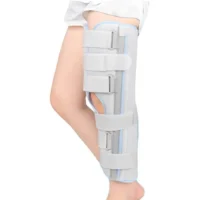
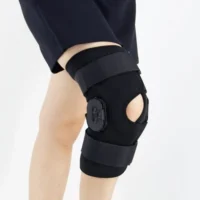
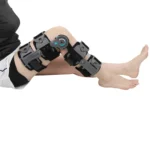
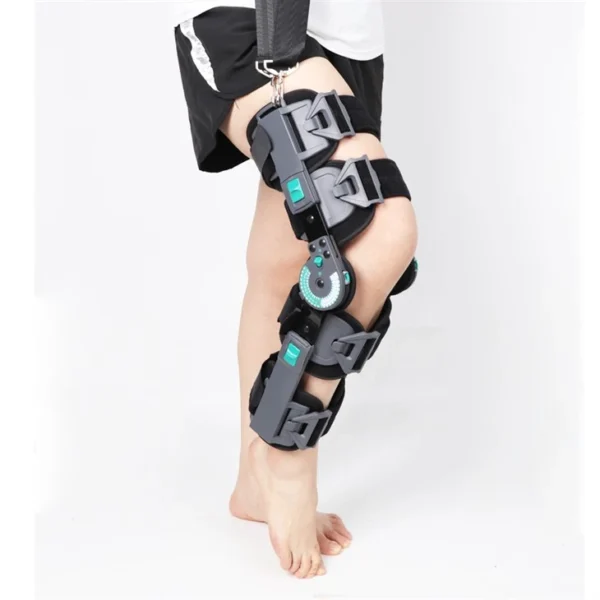
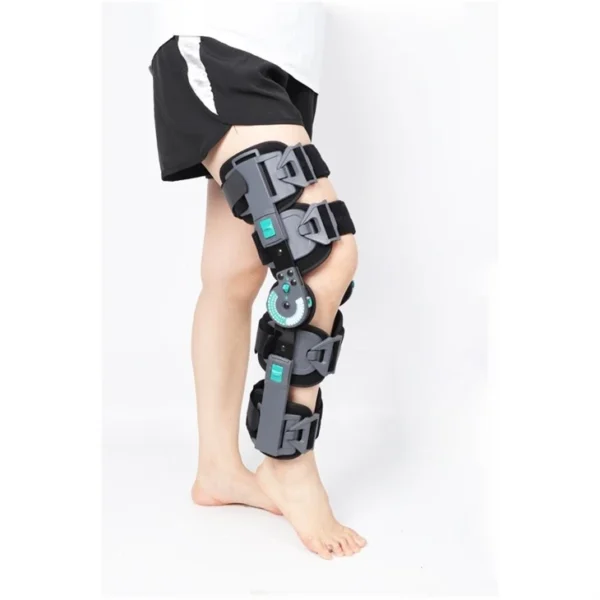
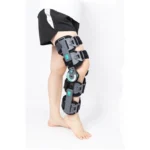
A knee brace for patella dislocation is a hinged orthosis that keeps the kneecap tracking inside its groove and limits how far the knee may bend while the soft tissues settle. After a kneecap has slipped out of place, the joint needs protection in a controlled range rather than complete stillness, and the brace is usually combined with a strengthening programme for the thigh muscles. Model KN-006 adds an emergency lock at seven positions plus a full set of flexion, extension and immobilization stops. It is not a knee sleeve, and it is not a single-angle knee immobilizer.
Why Choose This Multi-Angle Locking Knee Brace?
Stays put. So you can forget it’s there. That sentence is the design brief behind this brace, and it matters most for a knee brace for patella dislocation, because the kneecap is most likely to slip when the leg is under load and the brace has drifted. An analysis of 1,058 knee-brace reviews and community threads found the most common complaint was a support that slides down while you walk (109 mentions), followed by heat and itching (77), over-tightening and pressure on the calf (65), and unreliable sizing (64).
Four design decisions answer those complaints directly.
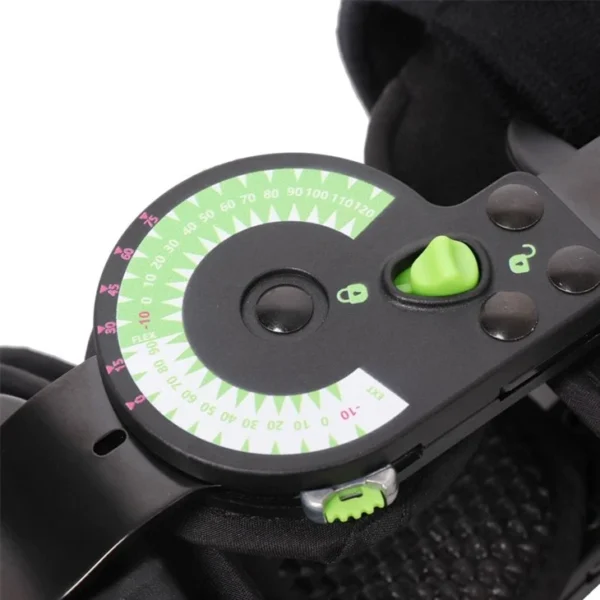
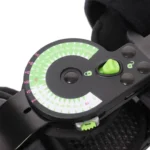
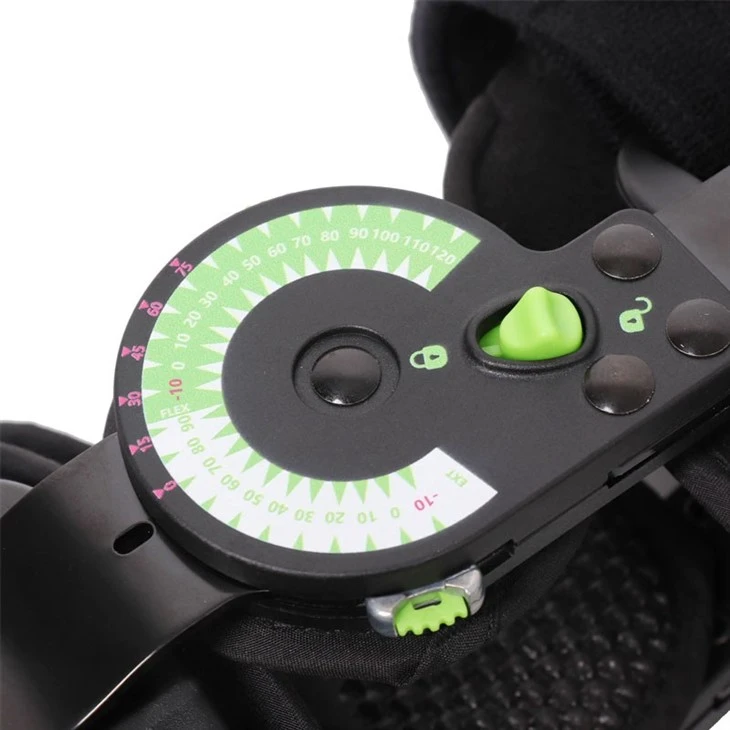
- Multi-Angle ROM Settings: Separate stop sets for flexion up to 120°, extension from −10° to 90° and immobilization across the whole arc, so the brace can be locked, opened or reset as the joint responds.
- Emergency Lock at Seven Angles: Lock settings at 0°, 15°, 30°, 45°, 60°, 75° and 90° let a clinician or carer secure the knee at a commonly used angle quickly, without working through the full dial.
- Length and Width Both Adjustable: The frame adjusts in two directions, so it can be matched to limb length and to thigh and calf circumference rather than only one of them.
- Durable Aluminium Hinge and Easy-Release Straps: Aluminium hinge plates with an easy-release structure and adjustable straps that secure the frame around thigh and calf, which is what keeps a knee brace for patella dislocation in position during walking.
Premium Engineering & Design Details
Every value below applies to model KN-006, the hinged knee brace for patella dislocation in this listing.
Strategic Advantage Over Standard Knee Immobilizers
Compared with a standard knee brace for patella dislocation or a single-angle knee immobilizer, four structural differences matter most.
- Adjustable Instead of One Fixed Angle: A knee immobilizer holds the knee at a single position, so it is only useful for part of the recovery. This brace can be locked and then opened through a full arc, which keeps one device useful from the first week onwards.
- Hyperextension Control: Extension settings start at −10°, above and below neutral, so a knee that has been unstable can be protected against the wrong-direction movement that caused the dislocation.
- An Emergency Lock for Real Situations: Seven quick lock positions mean the knee can be secured at a commonly used angle in a hurry, without turning through the full dial.
- Two-Direction Fit: Length and width both adjust, so the brace fits the limb rather than only the thigh circumference — an important point for a hinged frame that has to stay on the joint line.
One honest limitation: this brace is protection and positioning, not a cure. A patella that continues to dislocate may need surgical treatment, and no brace can substitute for the thigh-strengthening programme that keeps the kneecap aligned. If dislocations keep recurring, talk to an orthopaedic specialist rather than relying on a brace alone.
For distributors and private-label brands, OEM and ODM programmes are available, including logo, packaging and specification development.
Indications: Patella Dislocation & Knee Fracture Fixation
This knee brace for patella dislocation is intended for the clinical situations below.
- Patella dislocation, patellar instability and post-reduction protection of the kneecap
- Post-operative immobilization after knee surgery, including soft-tissue procedures around the kneecap
- Knee fracture fixation and rehabilitation support, where the joint must be protected while it heals
- Pre-operative immobilization due to injury or pain
- Conservative treatment of ligament injury managed without surgery
- Knee joint instability that requires controlled motion support under professional guidance
The American Academy of Orthopaedic Surgeons (AAOS) patient information on patellar (kneecap) instability notes that a first-time dislocation is usually treated without surgery, using exercises and bracing with a gradual return to sport, that a stabilizing brace may be prescribed, and that the goal is a return to normal activity within one to three months.
If your protocol progresses from immobilization to controlled movement, see our post op knee brace. Browse the full range of knee braces for other stages of recovery.
Sizing & Fitting Guide (Length & Width Adjustable)
This knee brace for patella dislocation is a universal fit that adjusts in two directions, so it can be matched to limb length and to thigh and calf circumference.
Fitting in three steps: set the frame width to your thigh and calf first, then slide the length so each hinge sits level with the centre of your knee joint; set the flexion, extension and immobilization stops to the angles you have been given; finally close the straps from the top down and check that the hinge plates sit flat against the sides of the knee.
Use the emergency lock for securement, not for daily progression. A knee brace for patella dislocation should be moved from one prescribed angle to the next by the clinician directing your rehabilitation, not by how the knee feels on a given morning.
Frequently Asked Questions (FAQ)
What is a knee brace for patella dislocation used for? It keeps the kneecap tracking in its groove and limits how far the knee may bend while the soft tissues around the kneecap recover. It is used after a first dislocation, after reduction, and around surgical treatment of patellar instability.
Is this the same as a knee immobilizer? No. A knee immobilizer holds the knee at one fixed angle. This knee brace for patella dislocation is adjustable across a full arc, with an emergency lock at seven positions, so it can protect the joint early and then allow controlled movement later.
Can it be used for a knee fracture? Yes. Knee fracture fixation and rehabilitation support are listed indications, where the joint must be protected while the bone heals. Your surgeon will specify the angles for this knee brace for patella dislocation, and those settings should be followed exactly.
Do I need a left or a right brace? No. This knee brace for patella dislocation is a universal fit that adjusts in both length and width and can be worn on either leg.
How tight should the straps be? Firm enough that the frame does not rotate or slide when you walk, and loose enough that you can slide a finger under each strap. Re-check the straps after the first ten minutes of walking and again after an hour. A hinged knee brace for patella dislocation that is over-tightened will be uncomfortable and will not stay in place any better.
Will wearing a brace make my knee muscles weaker? A brace supports the joint; it does not replace rehabilitation. Keeping the kneecap in place depends on the strength of the muscles around the knee and hip, so the exercise programme your clinician gives you is the part that does the long-term work. Use this knee brace for patella dislocation as prescribed and keep to that programme.
Medical Disclaimer
This product is intended for general orthopedic stabilization and support purposes only. It does not constitute personalized medical advice. Always consult your primary healthcare provider, orthopedic specialist, or physical therapist to ensure this device is appropriate for your specific injury, rehabilitation schedule, and weight-bearing status before use.