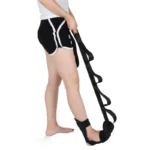
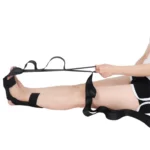
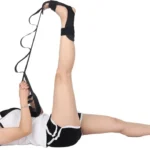
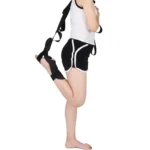
Description
What Is a Foot Stretcher Belt?
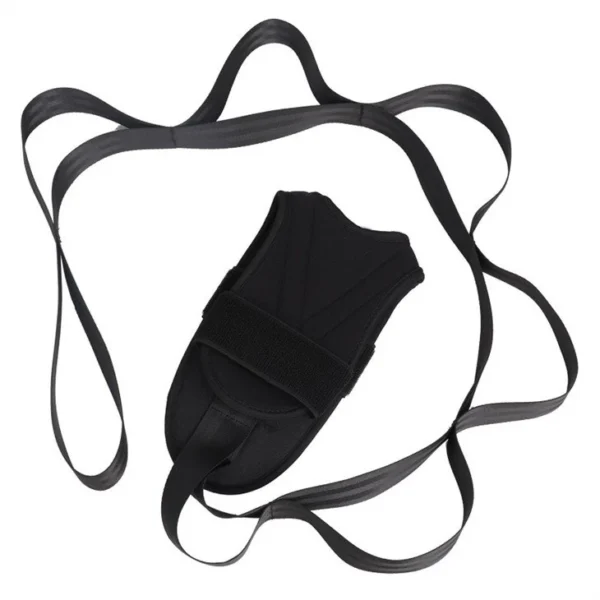
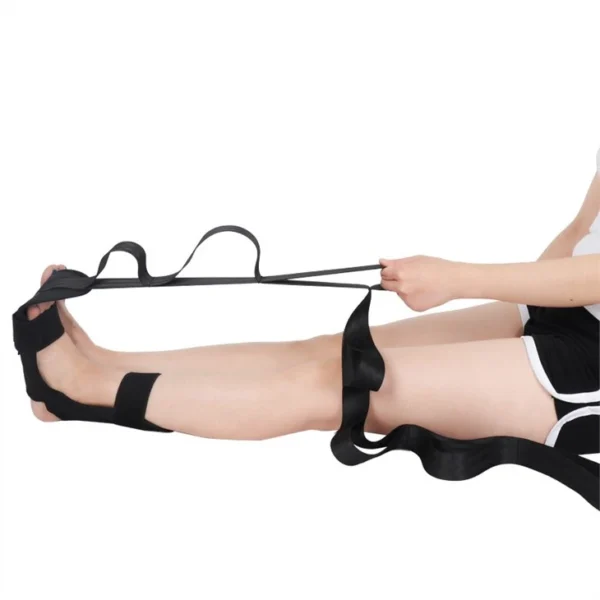
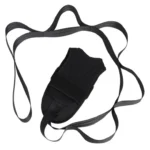
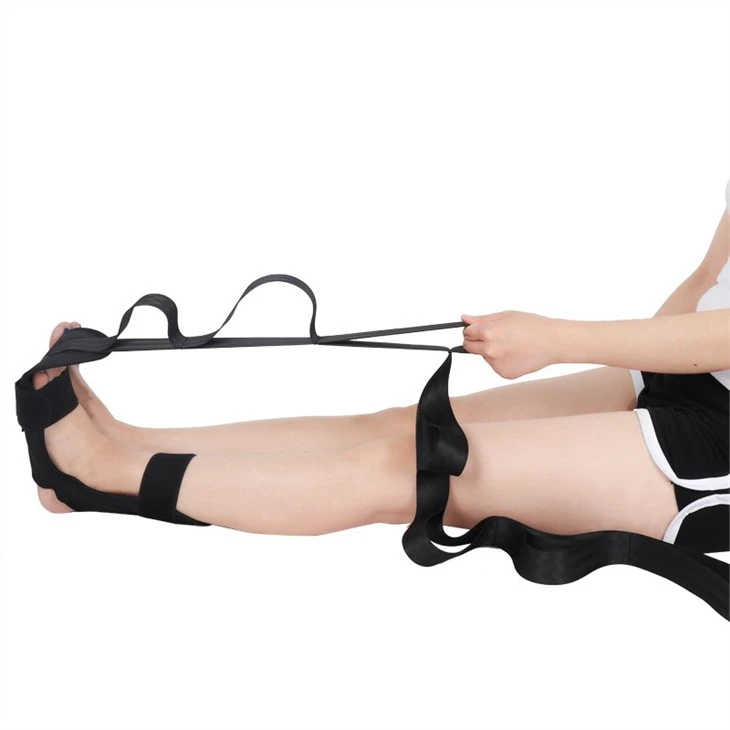
A foot stretcher belt is a strapping aid that lets you pull the toes and forefoot toward you from a seated or lying position, so the plantar fascia and the calf can be stretched without reaching down and holding the stretch by hand. Model AN-017 is a free-size stretch strap made from three layers — Oxford cloth, sponge and flannel — with a span designed to be held at a comfortable distance from the foot. It is a training aid for stretching and mobility work. It is not a brace, and it is not a treatment device.
Why Choose This Stretch Strap?
The problem a foot stretcher belt solves is leverage rather than strength. A calf or plantar fascia stretch has to be held for a reasonable time to be worth doing, and reaching forward to hold your own toes puts the back and the hip in an awkward position — which is why home stretching routines get dropped after a few days.
With a belt around the forefoot you can sit upright, hold the strap at the length that gives you the stretch, and stay there. That is the whole advantage: the position is easier to hold, so the routine is easier to keep.
- Free size with a long span: The strap is held in the hands at whatever distance suits your body, so one foot stretcher belt covers different heights and limb lengths.
- Comfortable to grip and to pull: High-quality materials ensure comfortable wearing and a firm hold during a stretch.
- Three-layer construction: Oxford cloth for durability and a soft hand, sponge for resilience, flannel against the skin for comfort.
- Supports joint mobility work: Made to help maintain good joint mobility rather than to stabilise a joint.
- Home use: Small, light and usable on a floor or a bed, which is what makes a daily routine realistic.
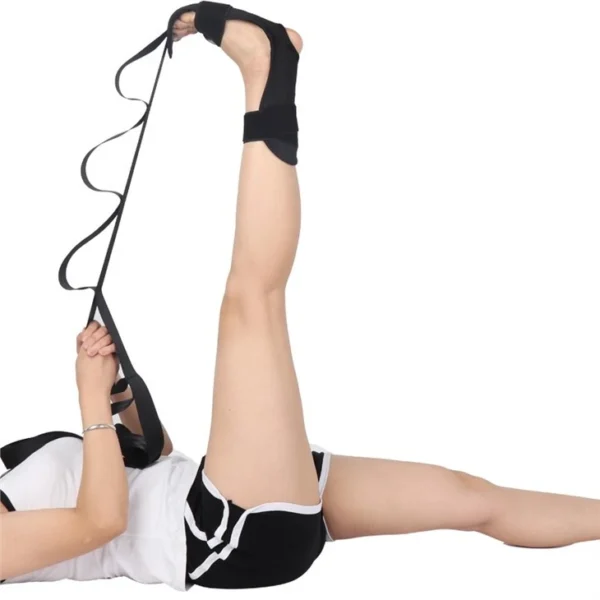
- Also usable for the leg and hip: The same foot stretcher belt can be looped for hamstring and calf work during training or yoga-style stretching.
Premium Engineering & Design Details
Every value below applies to model AN-017, the foot stretcher belt in this listing.
Three-Layer Strap: Oxford, Sponge & Flannel
The layers are arranged for the way a stretch strap is actually used. The outer face is Oxford cloth, chosen for a light texture with a soft hand and good resistance to wear and moisture — that is the part the hands pull on, so it has to survive repeated loading.
The core is sponge with high resilience and stretchability, which does a specific job: it lets a foot stretcher belt give slightly under tension instead of transferring every pull straight to the arch, and that small amount of give is what makes a longer hold tolerable.
The skin side is flannel, and the manufacturer describes the fluff as fine and dense, which is what makes it skin-friendly with good heat retention. In practice that matters most for bare-foot stretching, where the strap crosses the arch and the ball of the foot: a dense flannel surface spreads the load and stays comfortable, while a smooth web strap tends to cut in.
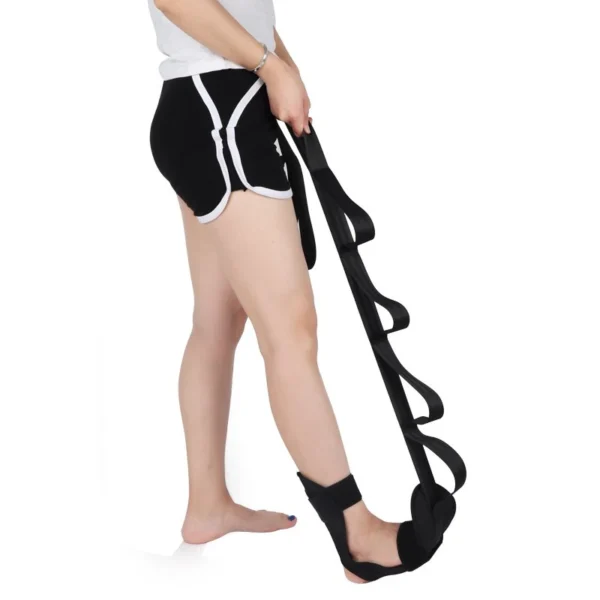
Loop the belt around the ball of the foot rather than the toes, keep the knee soft, and pull until you feel the stretch rather than until it hurts — then hold and breathe.
Best For: Plantar Fascia & Calf Stretching
This foot stretcher belt is intended for the training and mobility situations below.
- Stretching that targets the plantar fascia and the sole of the foot
- Calf and lower-leg stretching from a seated position, where the strap replaces reaching for the toes
- Rehabilitation and mobility training as an aid to the routine your clinician has set
- Lower limb muscle strength and flexibility work as part of a general training programme
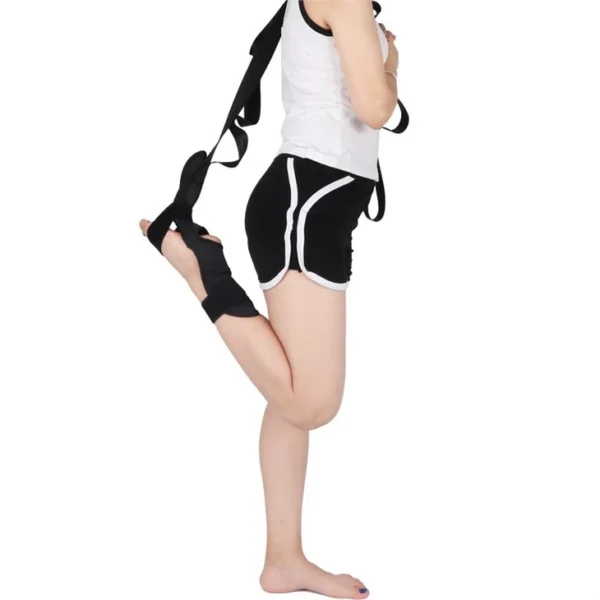
- Yoga-style stretching assistance and foot and leg mobility work
The American Academy of Orthopaedic Surgeons describes stretching and a graduated loading programme as part of the first-line management of plantar heel pain, with the overnight position handled separately. See the AAOS patient information on plantar fasciitis and bone spurs for how stretching fits into that plan. Two limits belong in plain language.
A foot stretcher belt is a stretching aid — it holds a position, it does not treat a condition, and the routine it supports should come from your clinician or therapist. And a stretch should feel like tension, never like pain: stop short of sharp pain, particularly in the first weeks.
One Size, Adjustable (Free Size)
There is no size to choose. A foot stretcher belt is held in the hands at whatever distance produces the stretch you want, so the same strap works for different heights and limb lengths.
Loop the strap around the ball of the foot, sit with the leg extended and the knee soft, then pull gently until the stretch is felt along the sole or the calf. Hold, breathe, and release slowly.
Two practical notes. Warm up briefly before you stretch — a few minutes of walking is enough — and stretch both sides evenly even if only one foot is the problem. And keep the foot stretcher belt somewhere you will see it: a strap that lives in a drawer gets used twice, while one that lives beside the bed or the yoga mat gets used daily, which is the only thing that makes a stretching routine work.
Who It’s For — and Who It Isn’t
This foot stretcher belt suits anyone whose routine includes foot, calf or lower-limb stretching and who wants to do it without reaching for their own toes.
- A good match when a plantar fascia or calf stretch has been recommended and the position is hard to hold by hand.
- A good match when mobility work is part of a training programme and a strap makes the routine easier to keep.
- A good match when reaching forward is uncomfortable for the back or hips, so the stretch needs to be done from a seated position.
- Not the right choice as a substitute for a prescribed rehabilitation programme or for hands-on therapy.
- Not the right choice where a clinician has advised against stretching — for example around a recent injury, a repair or a fracture. Browse the full ankle and foot braces range if you need support rather than a stretching aid.
Frequently Asked Questions (FAQ)
How long should I hold a stretch with this belt? The commonly taught approach in a stretching routine is a controlled hold of around half a minute, repeated a small number of times per side, keeping the stretch short of pain. Your clinician or therapist may set a different routine, and that one takes priority.
Is a foot stretcher belt a substitute for a night splint? No. They do different jobs: the belt stretches the foot for a few minutes while you are awake and working, and an overnight splint holds a position for hours while you sleep. A programme often uses both rather than one instead of the other.
Which foot do I use it on? Either — and it is worth stretching both sides evenly, even when only one foot is painful.
Can I use it for my calf and hamstring too? Yes. A foot stretcher belt is a strap: loop it around the forefoot for plantar fascia work, or use it for calf and hamstring stretching from the floor.
Should it feel painful? No. A stretch with a foot stretcher belt should feel like tension that eases as you hold it. Sharp pain, tingling or numbness are signals to come out of the position, not to pull harder.
How do I clean it? Hand-wash in cool water with a mild soap, rinse well and air-dry away from direct heat. Do not machine-dry it, and keep it out of a tumble dryer to protect the sponge core and the flannel face.
⚠️ Medical Disclaimer
This product is intended for general orthopedic stabilization and support purposes only. It does not constitute personalized medical advice. Always consult your primary healthcare provider, orthopedic specialist, or physical therapist to ensure this device is appropriate for your specific injury, rehabilitation schedule, and weight-bearing status before use.