
Orthopedic brace sourcing involves more than finding a supplier with competitive prices. Medical distributors, wholesalers, importers, rehabilitation equipment retailers, and private label brands must also evaluate product specifications, quality documentation, production capacity, lead times, and long-term supply reliability.
A structured orthopedic brace sourcing process helps buyers compare manufacturers, verify product requirements, and identify suitable suppliers before placing an order. By evaluating quality, documentation, pricing, and delivery terms together, businesses can make more informed purchasing decisions.
However, comparing suppliers without a clear evaluation process can lead to unexpected costs, inconsistent products, or delayed shipments. This guide explains seven practical checks to help you evaluate orthopedic brace suppliers, compare sourcing options, and make more informed purchasing decisions.
1. Evaluate the Product Range for Orthopedic Brace Sourcing
Start by identifying the orthopedic products your target market needs. A supplier with a suitable product portfolio may help simplify purchasing, coordinate multiple product categories, and support future business expansion.
Depending on your customers and distribution model, relevant products may include:
| Product Category | Typical Application |
|---|---|
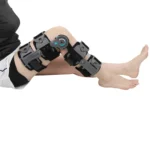
| Adjustable Knee Support Brace | Knee support and compression |
| Post-Op Knee Brace | Postoperative knee stabilization |
| Post-Op Elbow Brace with ROM | Controlled elbow range of motion |
| Short Air Walker Boot | Foot and ankle support |
| Long Air Walker Boot | Extended foot and ankle support |
| CAM Walker Boot | Walking support during recovery |
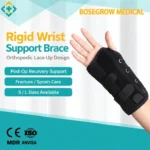
| Wrist Brace | Wrist stabilization and support |
| Cervical Collar | Neck support |
When evaluating an orthopedic brace manufacturer or supplier, confirm that the available models match your target market’s requirements.
Ask about:
- Available models, sizes, and product variations
- Product specifications and intended use
- Standard packaging and labeling
- OEM and private label options
- Minimum order quantities for individual products
- Availability of related rehabilitation support products
If you plan to expand your catalog, consider whether the supplier can support additional products without requiring you to establish a separate sourcing relationship for every category.
A well-planned orthopedic brace sourcing strategy starts with products that match your customers’ needs, target price range, and expected order volumes.
Practical tip: Prepare a shortlist of priority products before requesting quotations. This helps suppliers provide more relevant information and makes it easier to compare offers on a consistent basis.
2. Compare Quotations and Total Sourcing Costs
Price is an important factor in orthopedic brace sourcing, but the lowest unit price does not always represent the best purchasing option.
A useful quotation should provide enough detail for you to estimate the total cost of purchasing and delivering the products.
Include the following information in your quotation request:
- Product model and technical specifications
- Required quantity and size distribution
- Unit price and quotation currency
- Minimum order quantity (MOQ)
- Sample availability and sample cost
- Incoterms, such as FOB or EXW, where applicable
- Payment terms
- Estimated sample and production lead times
- Packaging and private label requirements
- Quotation validity period
When comparing suppliers, check whether their quotations cover the same specifications, quantities, packaging, and delivery terms.
For example, one supplier may quote a lower unit price but require a higher MOQ or charge additional fees for customized packaging. Another supplier may offer a more suitable order quantity and clearer delivery arrangements.
Consider the following cost factors:
| Cost Factor | What to Confirm |
|---|---|
| Product price | Is the price based on the same specification and quantity? |
| MOQ | Can you purchase a quantity appropriate for your market? |
| Packaging | Are standard packaging and customized options included? |
| Samples | Are sample products and shipping charged separately? |
| Shipping | Which transportation costs are included or excluded? |
| Payment | Are the payment terms suitable for your purchasing plan? |
Effective orthopedic brace sourcing requires buyers to compare equivalent products and clearly understand which costs are included in each quotation.
Comparing the full cost of each order is an essential part of orthopedic brace sourcing, especially when evaluating different MOQs, packaging options, and shipping arrangements.
3. Verify Certifications and Product Documentation
Documentation is an important part of supplier evaluation, particularly when purchasing medical devices or products marketed for medical use.
The documentation required for orthopedic braces depends on the product, its intended purpose, its regulatory classification, and the destination market.
Ask each supplier which documents are available for the specific products you plan to purchase.
Depending on the applicable requirements, relevant documents may include:
- Quality management system certificates, such as ISO 13485
- Applicable conformity documentation
- Product specifications and material information
- Instructions for Use (IFU)
- Product labels and packaging information
- Relevant testing reports
- Regulatory registration, listing, or authorization information, where applicable
Consult these official resources for further information:
- FDA: Device Registration and Listing — https://www.fda.gov/medical-devices/how-study-and-market-your-device/device-registration-and-listing
- ISO 13485: Medical Devices Quality Management Systems — https://www.iso.org/standard/59752.html
- European Commission: Medical Devices Sector — https://health.ec.europa.eu/medical-devices-sector_en
Do not assume that every orthopedic brace requires the same documentation. Requirements vary according to the product and market.
For example, FDA establishment registration and device listing do not, by themselves, mean that the FDA has approved or cleared a device. In the European Union, applicable requirements depend on the product’s classification and the relevant medical device rules.
Before placing an order, verify the validity and scope of relevant documents and confirm that they apply to the specific product and manufacturing entity.
Regulatory checks should be completed early in the orthopedic brace sourcing process to help prevent documentation gaps from delaying market entry or shipment.
Practical tip: Create a document checklist for each target market. This can help you identify missing information before committing to a purchase.
4. Confirm Product Specifications, Materials, and Intended Use
Product specifications directly affect fit, usability, product consistency, and customer satisfaction. Before finalizing an order, request the latest technical information and size chart.
Confirm the following details:
- Available sizes and measurement methods
- Main materials and component composition
- Product dimensions and weight, where relevant
- Adjustment mechanisms and fastening systems
- Intended use and stated limitations
- Cleaning and care instructions
- Instructions for Use
- Packaging and labeling languages
Different orthopedic braces may look similar in product photographs but have different functions and construction.
For example, knee braces may vary in hinge design, strap configuration, range-of-motion settings, and stabilization features. Walker boots may differ in height, sole design, liner construction, and pneumatic support systems.
Ask the supplier to explain these differences rather than relying on product names or images alone.
If you distribute products in several countries, confirm whether the size charts, labeling, packaging, and instructions meet the requirements of your customers and target markets.
Clear specifications also help reduce misunderstandings when placing repeat orders or comparing samples with mass-produced products.
5. Request Samples Before Bulk Purchasing
Product samples are useful for evaluating quality before committing to a larger order. They can help you compare suppliers and determine whether a product meets your purchasing requirements.
During sample evaluation, check:
- Material feel and visible workmanship
- Stitching, seams, and fastening quality
- Ease of adjustment and application
- Fit and comfort for the intended user
- Consistency with the agreed specifications
- Packaging, labeling, and included instructions
For hinged knee braces, inspect the hinge structure, straps, and adjustment mechanisms. For pneumatic walker boots, examine the inflation system, straps, liner, and overall construction.
Before ordering samples, confirm:
- Sample price and shipping cost
- Sample preparation time
- Whether the sample is a standard or customized model
- Whether the sample matches the intended mass production specifications
- Whether sample charges can be credited toward a later order
A sample inspection should be based on predefined requirements rather than appearance alone.
If you identify a problem, document it and ask the supplier to clarify how the issue will be addressed before approving production.
Sample evaluation is a practical step in orthopedic brace sourcing because it allows buyers to check whether the product meets agreed specifications before approving bulk production.
Practical tip: Keep a record of approved samples and agreed specifications so that future orders can be compared against the same requirements.
6. Confirm MOQ, Lead Times, and After-Sales Terms
Reliable delivery planning is essential for distributors, wholesalers, and importers. Delays or unclear order conditions can affect inventory planning and customer commitments.
During orthopedic brace sourcing, distinguish between sample preparation time, production lead time, and transportation time.
Ask the supplier to confirm:
- MOQ for each model
- Whether mixed sizes or models are accepted
- Sample preparation time
- Estimated mass production lead time
- Packaging and labeling preparation time
- Shipping arrangements and delivery terms
- Warranty scope and claim procedures
- Procedures for handling defective or nonconforming products
Lead times can vary according to order quantity, material availability, customization requirements, packaging, and the production schedule.
Request a current estimate for your specific order instead of relying on a general statement such as “fast delivery.”
You should also clarify how the supplier handles quality concerns. Ask what evidence is required for a claim, how quickly claims are reviewed, and what remedies may be available under the agreed terms.
Written agreements help both parties understand their responsibilities and reduce the risk of disputes.
For long-term orthopedic brace sourcing, documented delivery schedules and quality claim procedures help buyers manage inventory and reduce purchasing risks.
Practical tip: Confirm important commercial and quality terms in writing before paying a deposit or approving mass production.
7. Assess Communication and Long-Term Supply Capability
Your first order is only one part of a supplier relationship. For repeat purchasing, consistent product information, clear communication, and dependable order coordination can be just as important as price.
Evaluate whether the supplier:
- Responds clearly to technical and commercial questions
- Provides consistent product specifications
- Explains pricing and order conditions transparently
- Communicates realistic production schedules
- Supports required packaging or branding arrangements
- Provides appropriate documentation
- Has a defined process for handling quality concerns
If you are developing your own brand, ask whether OEM or private label services are available. Confirm the customization options, artwork requirements, additional costs, MOQ, and lead times.
For distributors and wholesalers, it is also useful to understand how the supplier manages repeat orders and communicates changes to product specifications or packaging.
You may wish to ask for information about production arrangements, quality control procedures, and the supplier’s experience with similar product categories. Assess the information provided against your own business requirements rather than relying on general claims.
The goal is to identify a sourcing partner whose capabilities align with your target markets, purchasing volumes, product requirements, and long-term plans.
Orthopedic Brace Sourcing Evaluation Checklist
Use this checklist to compare potential suppliers objectively. Applying the same criteria to each candidate makes it easier to identify strengths, gaps, and areas that require further confirmation.
| Evaluation Item | Questions to Ask |
|---|---|
| Product range | Does the supplier offer the models and sizes you need? |
| Specifications | Are materials, dimensions, and intended use documented? |
| Documentation | Are applicable certificates and product documents available? |
| Pricing | Are unit price, MOQ, payment terms, and Incoterms clear? |
| Samples | Can you inspect samples before bulk purchasing? |
| Lead time | Are sample preparation and production schedules stated? |
| Customization | Are OEM, private label, and packaging options available? |
| Quality support | Are warranty and defect-handling procedures defined? |
| Communication | Are responses clear, consistent, and timely? |
| Supply capability | Can the supplier support your expected order volume? |
For each supplier, record whether a requirement is confirmed, unconfirmed, or not applicable. This helps you identify the questions that must be resolved before placing an order.
If a requirement is essential to your business, obtain written confirmation rather than relying on a verbal assurance.
A consistent orthopedic brace sourcing checklist helps importers and distributors compare suppliers on product suitability, documentation, total cost, delivery reliability, and after-sales support. Use these criteria to build a sourcing process that fits your business requirements.
Source Orthopedic Braces and Rehabilitation Supports from Reluky
Reluky provides information for B2B buyers researching orthopedic braces and rehabilitation support products for wholesale, distribution, and sourcing purposes.
Explore relevant product categories:
When preparing a sourcing inquiry, include your target models, estimated quantities, destination market, customization preferences, and documentation requirements. Providing these details helps suppliers assess your needs and respond with more relevant information.
Whether you are sourcing knee braces, elbow supports, walker boots, or other orthopedic products, focus on product suitability, transparent commercial terms, appropriate documentation, and consistent communication.
A structured sourcing process can help you compare suppliers more effectively and make purchasing decisions based on your actual business requirements.
Frequently Asked Questions
What is orthopedic brace sourcing?
Orthopedic brace sourcing is the process of identifying, evaluating, and purchasing orthopedic support products from suitable manufacturers or suppliers. It may involve comparing product specifications, pricing, documentation, samples, production capacity, and delivery terms.
How do I choose an orthopedic brace supplier?
Start by checking the product range, specifications, applicable documentation, quotation terms, sample quality, lead times, and after-sales support. Confirm that the supplier can meet the requirements of your intended market.
What information should I include in a wholesale quotation request?
Include the product model, quantity, size distribution, customization requirements, destination market, preferred shipping terms, and documentation requirements. Ask for unit prices, MOQ, sample costs, payment terms, and estimated production lead times.
Should I request samples before placing a bulk order?
When practical, yes. Samples allow you to inspect workmanship, materials, adjustment mechanisms, fit, and packaging before committing to a larger purchase. Confirm that the sample reflects the specifications intended for mass production.
What certifications should an orthopedic brace supplier provide?
The required documents depend on the product, intended use, and destination market. Ask for applicable quality management certificates and product-specific regulatory documentation. Verify their validity and scope instead of assuming that one certificate covers every product or market.
Can orthopedic brace suppliers offer private label products?
Some suppliers offer OEM or private label services, but availability, customization options, MOQ, additional costs, and lead times vary. Confirm these conditions for each product before proceeding.
How can I compare two orthopedic brace suppliers fairly?
Use the same evaluation checklist for both suppliers. Compare product specifications, documentation, total sourcing costs, samples, lead times, customization options, supply capability, and after-sales support. Record any unconfirmed requirements and resolve them before placing an order.
How can I improve my orthopedic brace sourcing process?
Improve your orthopedic brace sourcing process by defining product specifications, comparing complete quotations, verifying applicable documentation, reviewing samples, and confirming lead times and after-sales terms before placing an order.